
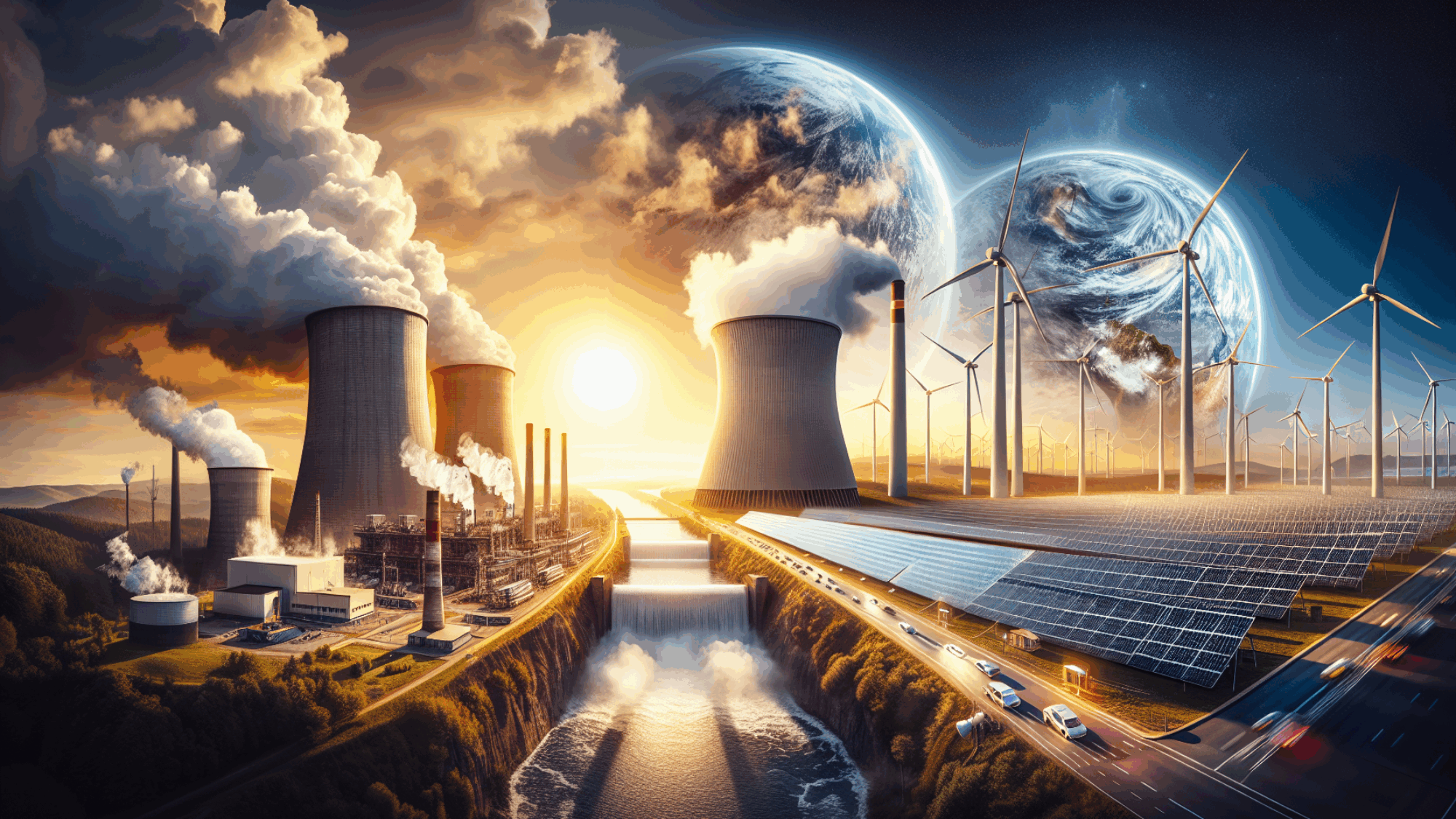
The hum of a refrigerator, the glow of a streetlamp, the countless devices connected to the internet – all these modern conveniences rely on a constant, invisible flow of energy: electricity.But have you ever stopped to think about where this fundamental force comes from? Electricity generation is a complex, fascinating, and ever-evolving field, representing humanity’s ingenuity in harnessing nature’s power to fuel our progress. From ancient fires to futuristic solar farms, the journey of how we generate the power that lights our lives is a testament to innovation and our continuous quest for a sustainable future.
At its core, most electricity generation relies on a simple principle discovered by Michael Faraday: electromagnetic induction. This means that if you move a conductor through a magnetic field, you generate an electric current. In practical terms, this is achieved using a generator, which consists of a turbine (a rotating machine) connected to an electromagnetic coil. The job of various power plants is simply to find a way to spin that turbine.
The Foundation: Spinning Turbines with Heat and Motion
Historically, and still predominantly today, the energy to spin these turbines comes from converting another form of energy into mechanical rotation.
Fossil Fuels: The Traditional Powerhouses
For over a century, fossil fuels – coal, natural gas, and oil – have been the backbone of global electricity generation.
- Coal: Mined from the earth, coal is burned to heat water, producing high-pressure steam that drives turbines. It’s abundant and relatively inexpensive in many regions, but its environmental impact, particularly carbon emissions and air pollutants, is significant. Globally, coal accounts for about 35% of electricity generation.
- Natural Gas: Often considered a “cleaner” fossil fuel, natural gas is burned in a turbine directly (in a gas turbine) or used to heat water for steam turbines. It produces fewer carbon emissions than coal, making it a popular choice for bridging the gap towards renewable energy. Natural gas powers around 23% of the world’s electricity.
- Oil: While historically important, oil is less commonly used for large-scale electricity generation today due to its higher cost and environmental concerns compared to natural gas, primarily serving as a fuel for transportation.
The main challenge with fossil fuels lies in their finite nature and their significant contribution to greenhouse gas emissions, driving climate change. This reality has spurred a global shift towards alternative sources.
Nuclear Power: Harnessing the Atom
Nuclear power plants represent another major method of generating electricity by heating water to produce steam. However, instead of burning fossil fuels, they split atoms – typically uranium-235 – in a controlled chain reaction called nuclear fission. This process releases an immense amount of heat, far more efficiently than combustion.
Nuclear power offers a powerful, reliable, and virtually carbon-emission-free source of electricity during operation. It currently provides about 10% of global electricity. Its advantages include high energy density and continuous power output, unaffected by weather conditions. However, concerns about radioactive waste disposal, the risk of accidents (like Chernobyl or Fukushima), and the potential for nuclear proliferation remain significant challenges that drive ongoing debate and safety innovations.
The Future is Green: Renewable Energy Sources
The growing urgency of climate change and the finite nature of fossil fuels have propelled renewable energy sources into the spotlight. These technologies harness naturally replenishing resources, offering a sustainable path forward.
Hydropower: The Force of Water
One of the oldest and most established forms of renewable energy, hydropower utilizes the kinetic energy of flowing water to spin turbines. Large-scale hydroelectric dams, like China’s Three Gorges Dam or Brazil’s Itaipu Dam, are massive infrastructure projects that store water in reservoirs and release it through turbines.
- Advantages: Clean, reliable, flexible (can be ramped up or down quickly), and often provides flood control and water supply benefits. It accounts for about 16% of global electricity generation.
- Disadvantages: Significant environmental and social impacts due to habitat alteration, displacement of communities, and disruption of natural river ecosystems.
Solar Power: Tapping the Sun’s Rays
Solar energy directly converts sunlight into electricity using photovoltaic (PV) cells or concentrates sunlight to heat fluids that drive turbines (Concentrated Solar Power or CSP).
- Photovoltaic (PV): Solar panels are increasingly common on rooftops and in large-scale solar farms. The global capacity of solar PV has surged, growing by an astonishing 25% in 2022 alone.
- Concentrated Solar Power (CSP): Uses mirrors to focus sunlight onto a receiver that heats a fluid, producing steam for a turbine.
Solar power is clean, abundant, and becoming increasingly cost-effective. Its main challenge is intermittency – it only generates power when the sun shines – requiring storage solutions or integration with other energy sources.
Wind Power: Harnessing the Invisible Force
Wind turbines, typically massive structures with blades spanning hundreds of feet, convert the kinetic energy of wind into electricity. These can be found in onshore wind farms or, increasingly, offshore, where winds are stronger and more consistent.
Wind power is a rapidly growing renewable source, providing around 7% of global electricity. In 2022, wind energy grew by 14% globally. It’s clean and doesn’t produce greenhouse gas emissions during operation. However, its intermittency, visual impact, noise concerns, and potential effects on wildlife are considerations for deployment.
Geothermal Energy: Earth’s Inner Heat
Geothermal power taps into the earth’s internal heat. In certain regions, hot water and steam from deep underground can be used directly to drive turbines. This is a reliable, baseload power source, meaning it can operate continuously, independent of weather. It’s geographically limited to areas with accessible geothermal reservoirs.
Biomass Energy: Organic Power
Biomass power involves burning organic matter such as wood, agricultural waste, or even municipal solid waste to produce heat, which then generates steam for turbines. While technically renewable as organic matter can regrow, its sustainability is debated due to land use, potential deforestation, and the emissions produced during combustion.
The Grid and the Future Landscape
Once electricity is generated, it enters a vast, interconnected network known as the electrical grid, which transmits it over long distances to homes, businesses, and industries. The future of electricity generation isn’t just about how we make power, but also how we manage and distribute it.
- Energy Storage: As renewables become more dominant, efficient and affordable energy storage solutions, primarily large-scale batteries, are crucial to ensure a stable supply when the sun isn’t shining or the wind isn’t blowing.
- Smart Grids: These advanced grids use digital communication technology to detect and react to local changes in electricity usage, improving efficiency, reliability, and integrating distributed renewable sources more effectively.
- Decentralized Generation: Moving away from massive central power plants, the trend is towards smaller, localized generation (like rooftop solar) that can feed power back into the grid, making the system more resilient.
- Technological Advancements: Research into fusion power, advanced modular nuclear reactors, and even airborne wind turbines promises exciting future possibilities.
Powering Tomorrow, Sustainably Today
Electricity generation is at a critical juncture. The shift away from fossil fuels towards a cleaner, more sustainable energy mix is accelerating, driven by environmental imperative, technological innovation, and economic viability. According to the International Energy Agency (IEA), renewable energy sources are set to account for over 90% of global electricity expansion over the next five years. This transition is not without its challenges, requiring significant investment in infrastructure, smart grid technologies, and energy storage solutions.
Understanding the diverse methods of electricity generation, their advantages, and their drawbacks is essential for informed decision-making as we collectively work towards a future powered by clean, reliable, and sustainable energy. The journey to a fully decarbonized grid is complex, but the path forward is clear: innovation, investment, and a collective commitment to powering our world responsibly.
Are you curious to learn more about how your local community generates its electricity, or how you can contribute to a more sustainable energy future? Explore resources from your local utility company or join community initiatives focused on clean energy transition. Your engagement can help shape the energy landscape of tomorrow!