
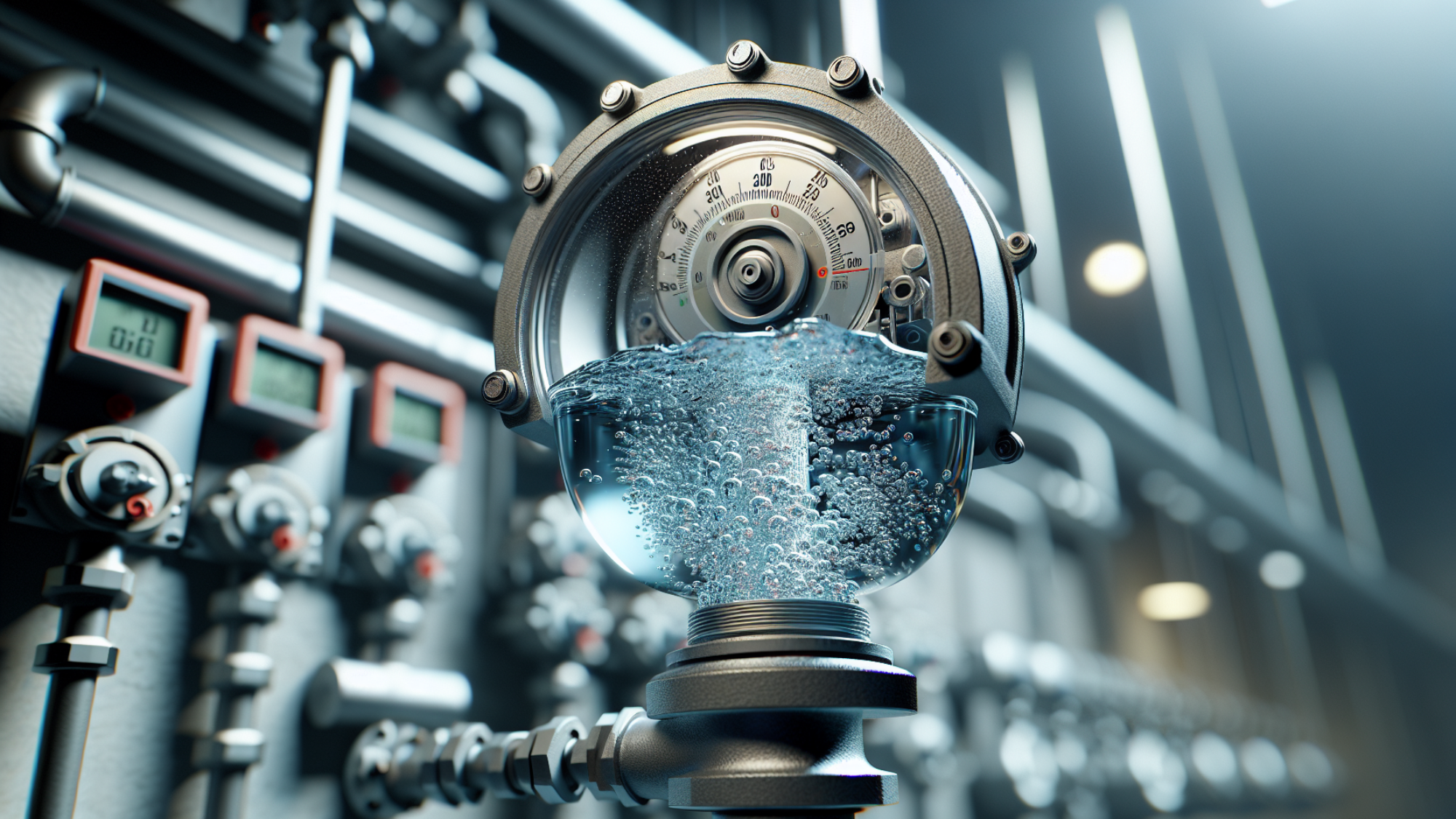
In the complex world of industrial operations, where efficiency and cost control are paramount, the accuracy of every measurement counts. Water, a fundamental resource, is no exception. While state-of-the-art flow sensors promise precision, even the most advanced systems can be undermined by subtle, often overlooked factors, leading to significant discrepancies between actual usage and billed amounts. Imagine the frustration of uncovering consistent over-reporting on monthly water bills, not due to a faulty meter, but because of tiny, persistent air bubbles in the pipeline—a scenario that underscores the critical importance of vigilant flow measurement.
Such an experience highlights a common, yet frequently missed, challenge in water management. These subtle errors, if left unchecked, can erode trust in billing systems, inflate operational budgets, and distort critical resource consumption data. This isn’t just about paying more; it’s about understanding your true water footprint, managing resources effectively, and maintaining the financial integrity of your operations.
The Unseen Culprit: Understanding Subtle Flow Errors
While outright meter failure is usually obvious, subtle inaccuracies can be far more insidious, silently siphoning funds or misrepresenting usage. The presence of air bubbles, as described, is a prime example. Here’s why such factors are so problematic:
- Air Entrainment: Many flow meters, particularly mechanical (e.g., turbine, multi-jet) and some ultrasonic types, struggle with air pockets or bubbles. Air, being less dense than water, can accelerate the impeller in mechanical meters or distort ultrasonic signals, causing the meter to register non-existent flow or significantly overstate actual water volume. This effect is often magnified under low-flow conditions where bubbles have more time to coalesce or move erratically.
- Pulsating Flow: Pumps, valves, and specific system designs can create pulsating flow, where the water moves in surges. Many meters are designed for steady flow, and pulsations can lead to inaccurate readings, often over-registering.
- Incorrect Installation: Deviations from manufacturer guidelines regarding upstream and downstream straight pipe lengths, orientation, or proximity to elbows/valves can create turbulent flow profiles that meters struggle to measure accurately.
- Sensor Drift and Fouling: Over time, sensors can drift from their original calibration point, or become fouled by sediment, minerals, or biological growth, leading to gradual inaccuracies.
- Temperature and Pressure Variations: While many modern meters compensate, significant, uncompensated swings in water temperature or pressure can affect density and thus volumetric flow calculations.
- Cavitation: If pressure drops too low, water can turn into vapor bubbles (cavitation). These bubbles, similar to air entrainment, can wreak havoc on meter accuracy and even damage the meter or piping.
These factors can be hard to detect because the meter appears to be working, providing readings that simply don’t align with reality.
Why Accuracy Matters: Beyond the Bill
The impact of inaccurate water flow measurement extends far beyond correcting a billing statement.
- Direct Financial Losses: The most immediate consequence is overpaying for water you didn’t use, or under-billing if you are a supplier, leading to significant financial losses over time. Even a small percentage error, compounded monthly, can amount to thousands of dollars annually for large industrial consumers.
- Operational Inefficiency: Inaccurate data obscures the true picture of water consumption. This can lead to inefficient process optimization, misjudgment of water-intensive operations, or a failure to detect actual leaks elsewhere in the system because the baseline consumption is skewed.
- Resource Management and Sustainability: Accurate metering is fundamental for effective water resource management. Without it, conservation efforts cannot be properly assessed, and sustainability goals become harder to achieve.
- Trust and Accountability: Consistent billing discrepancies erode trust between utilities and consumers, or between departments within an organization. It can also lead to disputes and complex reconciliation processes.
- Regulatory Compliance: Many industries face regulations concerning water discharge and consumption. Accurate metering is crucial for compliance reporting and avoiding penalties.
Quick Diagnostic Tips for Catching Errors Early
Catching subtle flow measurement errors before they escalate into major billing or operational headaches requires a proactive approach. Here are some quick diagnostic tips:
- Regular Cross-Verification: As highlighted by the user’s experience, compare billed usage with independent measurements. This could be manual logs, readings from upstream/downstream meters (if available), or even estimates based on known process consumption rates. Any consistent deviation should be a red flag.
- Visual Inspection for Air: Periodically inspect transparent pipe sections or use a clear inspection window upstream of the meter. Look for persistent air bubbles, foam, or pockets, especially under low-flow conditions. If no transparent section exists, listen for gurgling sounds that might indicate air.
- Zero-Flow Check: When there is no known water usage in a specific section, ensure the meter reads absolute zero. A meter that continues to register flow indicates a potential leak or, more subtly, that it’s being “tricked” by air or noise in the system.
- Pressure Gauge Analysis: Install pressure gauges before and after the meter. Unusual pressure drops or fluctuations could indicate blockages, cavitation, or incorrect flow conditions.
- Flow Profile Stability Check: If possible, observe the meter’s reading for stability. Highly fluctuating readings in a supposedly steady flow indicate turbulence or other flow anomalies.
- Portable Ultrasonic Meters: Invest in or rent a clamp-on portable ultrasonic flow meter. These non-invasive devices can provide quick, independent spot checks to verify the readings of installed meters. They are excellent for identifying discrepancies without shutting down the system.
- Historical Data Trending: Utilize data logging from smart meters or SCADA systems. Plot consumption trends over time. Sudden, unexplainable spikes or drops, or a consistent deviation from historical averages, warrant investigation.
- Manufacturer Guidelines Review: Revisit the installation manual for your specific meter. Ensure all recommendations for straight pipe runs, grounding, and isolation are being met. Incorrect installation is a surprisingly common source of error.
- Bubble Traps and Air Release Valves: If air is suspected, consider strategically installing automatic air release valves (ARVs) at high points in the pipeline or bubble traps upstream of critical meters. This can physically remove entrained air.
Preventative Measures & Best Practices
Beyond diagnostics, proactive steps are crucial for maintaining long-term accuracy:
- Proper Meter Sizing and Selection: Ensure the meter is correctly sized for your typical flow rates and the application. Different meter technologies are suited for different flow conditions (e.g., electromagnetic for dirty water, ultrasonic for minimal pressure drop).
- Routine Calibration: Implement a schedule for professional meter calibration. Even highly accurate meters benefit from periodic checks and adjustments to compensate for wear and tear or sensor drift.
- Strategic Meter Placement: Place meters in locations with optimal flow conditions—away from pumps, valves, and sharp bends—and ensure adequate straight pipe runs upstream and downstream.
- Invest in Advanced Metering Infrastructure (AMI): Smart meters with remote monitoring capabilities can provide granular data, enabling earlier detection of anomalies and trending of usage patterns. Some advanced ultrasonic meters can even detect and compensate for small amounts of air.
- Staff Training: Equip your maintenance and operational teams with the knowledge to understand meter types, common error sources, and basic diagnostic procedures.
Conclusion
The integrity of your water usage data is as vital as the water itself. Subtle flow measurement errors, like the insidious air bubbles, can quietly undermine your financial controls and operational efficiency. By embracing vigilance, implementing regular diagnostic checks, and investing in preventative measures, you can ensure your water meters tell the true story of your consumption. Don’t wait for the next billing cycle discrepancy to act; proactive measurement accuracy is a cornerstone of smart, sustainable, and cost-effective industrial operations.
Take Action: Review your water metering systems today. Conduct a quick audit using the tips above, and consider scheduling a professional meter calibration or system health check. Ensuring accurate measurement is an investment that pays dividends in financial savings and operational clarity.