
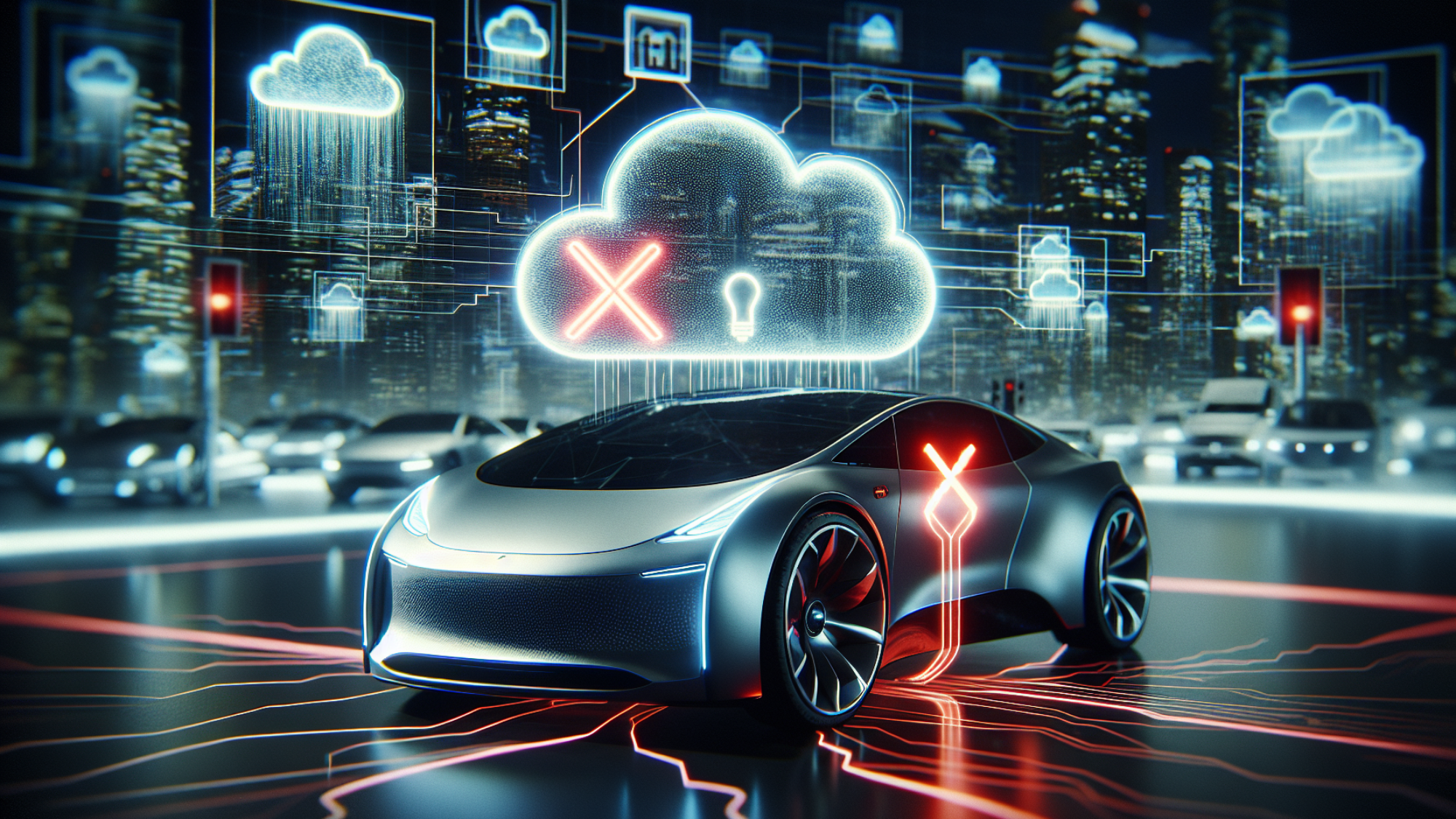
The hum of innovation often goes hand-in-hand with the whisper of vulnerability, a truth starkly highlighted by a recent incident that left many Tesla owners temporarily unable to access their vehicles via the familiar smartphone app. What began as a minor inconvenience for some quickly escalated into a widespread frustration, revealing the intricate dependencies of our hyper-connected world on robust digital infrastructure. This cloud sync outage, while temporary, offers a potent case study into the future of connected mobility and the non-negotiable demand for reliability in the digital age.
Imagine approaching your car, phone in hand, ready to unlock it, pre-condition the cabin, or check its charge status, only to be met with an unresponsive app. For thousands of Tesla owners across various regions, this scenario became a reality when the company’s cloud systems experienced a disruption. The core issue stemmed from a server-side problem that prevented the Tesla mobile app from communicating effectively with vehicles, essentially severing the digital umbilical cord that many owners rely on daily. While physical key cards and in-car controls remained functional for primary operations, the reliance on the app for convenience features, remote access, and sometimes even starting the car in specific scenarios, left users feeling stranded in a digital void.
The Intricate Web of Cloud Sync in Connected Vehicles
To truly grasp the significance of such an outage, it’s essential to understand the role of cloud synchronization in modern connected vehicles, particularly those as advanced as Tesla’s. Cloud sync isn’t just about backing up your preferences; it’s the invisible backbone that enables a suite of functionalities:
- Remote Access and Control: Unlocking/locking doors, flashing lights, honking the horn, activating Sentry Mode, and controlling climate remotely.
- Real-time Data and Diagnostics: Monitoring charge status, location, driving metrics, and even scheduling service.
- Software Updates: Over-the-air (OTA) updates for new features, performance enhancements, and bug fixes.
- Personalization: Syncing user profiles, navigation preferences, and entertainment settings across different vehicles or after a service visit.
- Security Features: Managing digital keys, PIN-to-drive, and location tracking.
When cloud sync fails, this entire ecosystem of convenience and control becomes compromised. For a brand that prides itself on being at the forefront of automotive technology, an outage of this nature serves as a critical reminder of the fragility inherent in complex, interconnected systems.
Root Causes and Ripple Effects: A Deep Dive
While the specific technical details of Tesla’s outage are proprietary, general causes for such cloud-based disruptions often include:
- Software Bugs: Errors in code deployments, system updates, or database interactions.
- Infrastructure Overload: Unexpected surges in traffic or data requests overwhelming server capacity.
- Hardware Failures: Malfunctions in servers, networking equipment, or data storage units.
- Configuration Errors: Misconfigurations during system changes or maintenance.
- Security Incidents: Although less common, cyberattacks can also disrupt services.
The ripple effects of even a temporary outage extend far beyond mere inconvenience. For individual owners, it can mean missed appointments, anxiety over vehicle security, or simply a disrupted daily routine. On a broader scale, such incidents erode trust in the technology and its providers. A 2021 report by Statista indicated that the global cost of cloud downtime to businesses can run into millions of dollars per hour, and while this applies mainly to enterprise services, the reputational damage and impact on user experience for consumer-facing tech like connected cars are immeasurable.
The Imperative of Reliability and Redundancy
The Tesla outage underscores a fundamental truth about the digital future: reliability is not an optional feature; it is foundational. As more aspects of our lives, from transportation to healthcare, become digitized and cloud-dependent, the expectation for “always-on” functionality will only intensify.
To mitigate such risks, organizations must prioritize:
- Redundant Systems: Implementing backup servers, data centers, and network paths so that if one component fails, another can seamlessly take over.
- Geographic Distribution: Spreading infrastructure across different regions to protect against localized outages (e.g., power failures, natural disasters).
- Robust Monitoring and Alerting: Sophisticated systems that detect anomalies and potential failures before they impact users, allowing for proactive intervention.
- Automated Failover: Technologies that automatically switch to backup systems in the event of a primary system failure, minimizing downtime.
- Decentralization and Edge Computing: Exploring architectures where some processing and data storage occur closer to the “edge” (e.g., within the vehicle itself) to reduce reliance on constant central cloud connectivity for critical functions. This would allow essential operations, like unlocking and starting, to function even without an active internet connection.
Lessons Learned and Moving Forward
For Tesla and other automotive manufacturers developing connected vehicles, this incident provides invaluable lessons:
- Offline Functionality is Key: While cloud connectivity offers unparalleled convenience, critical vehicle functions (like unlocking and starting) must have robust offline contingencies. Users should never be completely locked out by a server issue.
- Communication is Paramount: During an outage, clear, timely, and transparent communication from the provider is crucial to managing user expectations and frustration.
- Stress Testing and Scalability: Continuous investment in infrastructure scalability and rigorous stress testing is vital to handle peak loads and unforeseen issues.
- Embrace Resilient Architecture: Moving beyond basic redundancy to more resilient, self-healing architectures will be essential as vehicle features become increasingly cloud-dependent.
The future of connected vehicles is undeniably bright, promising enhanced safety, efficiency, and a more integrated driving experience. However, realizing this potential hinges on the unwavering commitment to building systems that are not just innovative but also exceptionally reliable. The digital doors must always open, even when the cloud momentarily dims.
The Future of Connected Vehicles: A Call for Resiliency
As we hurtle towards a future where cars communicate with infrastructure, other vehicles, and personal devices, the importance of robust, always-on connectivity cannot be overstated. From autonomous driving systems that rely on real-time data to vehicle-to-grid (V2G) capabilities, the digital backbone will become increasingly critical. This necessitates a paradigm shift in how we approach system design, prioritizing not just functionality but also resilience, security, and fail-safe mechanisms.
The Tesla cloud sync outage wasn’t just a blip on the radar; it was a loud reminder of the challenges and responsibilities that come with pioneering a connected future. It highlighted that while innovation pushes boundaries, it’s reliability that builds trust and ensures the seamless integration of technology into our daily lives. As consumers, we expect our connected devices, especially our vehicles, to be consistently available and functional, a benchmark that will drive further advancements in system architecture and operational excellence.
Ready to ensure your critical systems are always online and performing optimally? Explore our solutions for enhancing system reliability and uptime, ensuring your operations never miss a beat.