
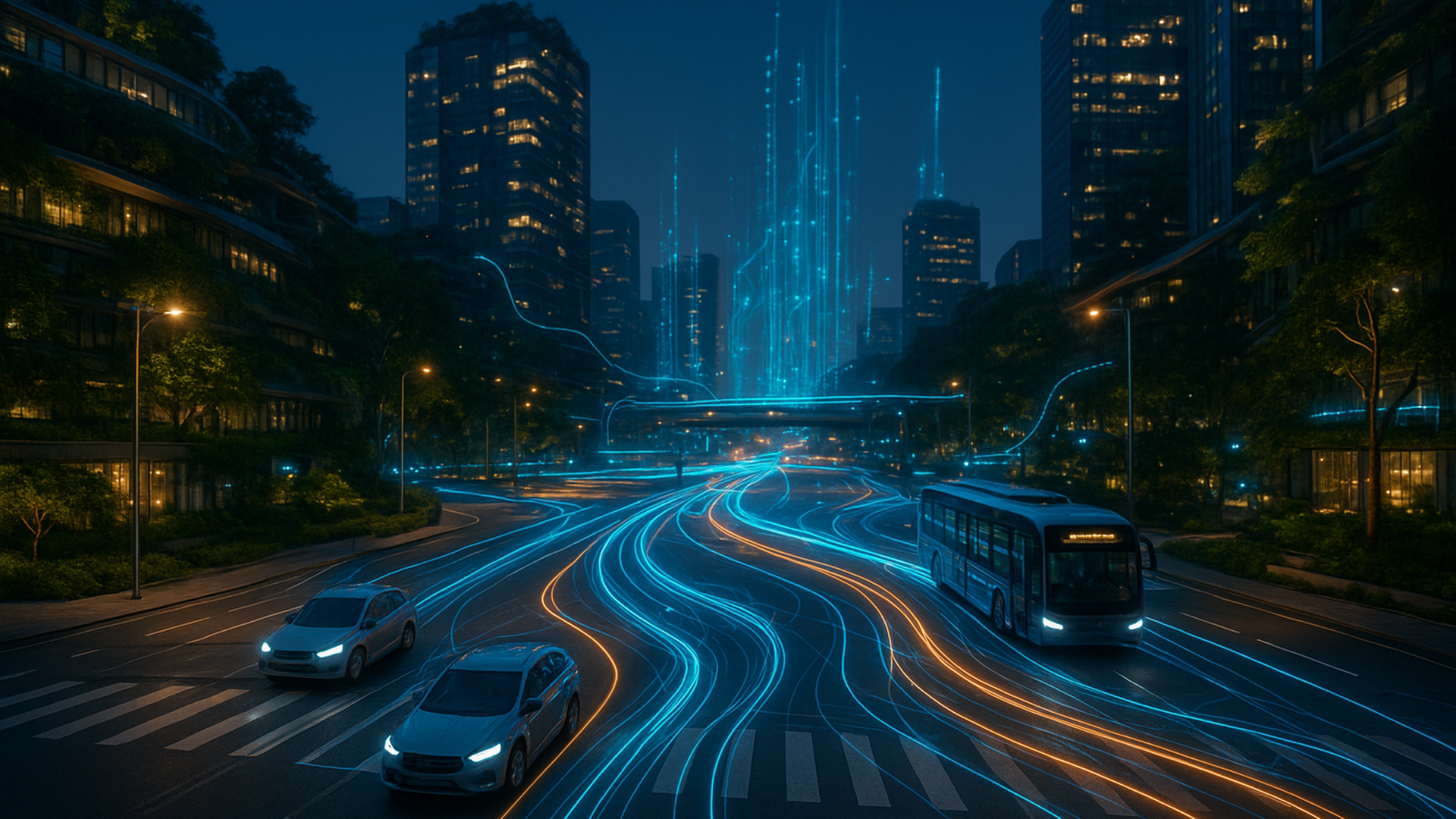
Imagine sitting at a red light in the middle of a bustling downtown area. The light stays red long after no cars have crossed from the opposite direction. You glance around and see a sea of idling engines, the smell of exhaust fumes, and a palpable sense of collective frustration. This scene is all too familiar in modern metropolises, but it is rapidly becoming a relic of the past.
As urban populations swell, traditional traffic management—relying on fixed-timer signals and human intervention—is failing. Enter the Smart Traffic Management System (STMS). By integrating Artificial Intelligence (AI), the Internet of Things (IoT), and real-time data analytics, cities are no longer just reacting to traffic; they are predicting and preventing it.
What Exactly is a Smart Traffic Management System?
At its core, a Smart Traffic Management System is a digital nervous system for a city’s roads. Unlike traditional systems that operate on pre-set schedules, an STMS uses a continuous loop of sensing, analyzing, and acting.
The ecosystem typically consists of three main layers:
- The Perception Layer: This includes IoT sensors, high-definition cameras with computer vision, inductive loop detectors embedded in the road, and even GPS data harvested from smartphones and connected vehicles.
- The Intelligence Layer: This is where the “magic” happens. Cloud-based AI platforms process the massive influx of data to identify patterns, detect accidents, and predict congestion before it happens.
- The Application Layer: The system pushes instructions back to the physical world. This might mean adjusting signal timings in real-time, updating digital signage to redirect drivers, or sending emergency alerts to autonomous vehicle navigation systems.
The Tech Behind the Flow: Key Components
To understand why some cities are ahead of others, we must look at the specific technologies driving these advancements.
Adaptive Signal Control Technology (ASCT)
Traditional lights change every 60 or 90 seconds regardless of demand. ASCT uses real-time data to adjust the “green time” based on actual vehicle presence. If a platoon of cars is approaching from a side street, the system recognizes it and extends the green light, minimizing unnecessary stops.
Computer Vision and AI
Modern traffic cameras are no longer just recording video; they are “seeing” and “understanding.” AI algorithms can distinguish between a bus, a cyclist, a pedestrian, and a car. This allows the system to prioritize public transit or provide longer crossing times for pedestrians in high-traffic zones.
Vehicle-to-Everything (V2X) Communication
This is the frontier of smart mobility. V2X allows the infrastructure to talk directly to the vehicles. A smart intersection can broadcast a “warning” to an approaching car that a pedestrian is entering a crosswalk, or tell a fleet of autonomous taxis to slow down due to upcoming roadworks.
Leading the Charge: Which Cities Have Integrated STMS?
Smart traffic management isn’t a monolithic solution; different cities take different approaches based on their geography and existing infrastructure.
Singapore: The Gold Standard
Singapore is widely considered the world leader in smart urban mobility. Through its “Smart Nation” initiative, the city-state has implemented an incredibly sophisticated Electronic Road Pricing (ERP) system. This system uses sensors to charge motorists different rates based on the time of day and the level of congestion, effectively using economic levers to manage traffic flow. Their integration of real-time data across public transit and private vehicles creates a seamless, highly efficient ecosystem.
Hangzhou, China: The “City Brain”
Perhaps the most impressive technological feat is Alibaba’s “City Brain” in Hangzhou. By utilizing massive AI processing power, Hangzhou transformed its traffic landscape. Before the implementation, Hangzhou was one of the most congested cities in China. After the City Brain was integrated, the city’s congestion ranking plummeted, moving from the 5th most congested city to the 57th. The system optimizes thousands of traffic lights simultaneously, creating “green waves” for emergency vehicles and public buses.
Barcelona, Spain: The IoT Pioneer
Barcelona has taken a more decentralized, IoT-centric approach. The city uses a vast network of sensors to manage everything from parking availability to traffic flow. Their “Superblocks” model, supported by smart data, redirects through-traffic around residential clusters, creating quieter, safer, and more breathable urban environments.
London, United Kingdom: Data-Driven Congestion Management
London has long been a pioneer in managing urban density through its Congestion Charge zone. However, the city has moved far beyond simple tolls. London uses a complex network of smart cameras and sensors to monitor traffic density and pollution levels, using this data to inform transit policy and real-time navigation for commuters.
The Tangible Impact: Why It Matters
The transition to smart infrastructure isn’t just about convenience; it’s about survival in an increasingly urbanized world. The statistics supporting these systems are compelling:
- Reduced Travel Time: Studies on adaptive signal control suggest that cities can see a reduction in travel time by as much as 15% to 30%.
- Environmental Gains: By reducing idling time at red lights, STMS can significantly lower CO2 emissions and improve local air quality.
- Enhanced Safety: AI-driven systems can detect accidents almost instantly, reducing the “golden hour” response time for emergency services.
- Economic Efficiency: Congestion costs the global economy billions of dollars annually in lost productivity. Reducing traffic jams translates directly to a healthier bottom line for urban economies.
Challenges on the Road to Intelligence
Despite the benefits, the path to a fully smart city is not without hurdles. High initial capital expenditure is a significant barrier for many municipalities. Furthermore, the massive amount of data collected raises critical questions regarding privacy and cybersecurity. If a city’s traffic system is connected to the internet, it becomes a potential target for cyberattacks, making robust security protocols non-negotiable.
The Road Ahead
As we look toward the next decade, the integration of Autonomous Vehicles (AVs) will be the ultimate test for smart traffic management. A city filled with self-driving cars will require a level of digital coordination far beyond what we currently demand. We are moving toward a future where the distinction between “the car” and “the road” blurs, creating a singular, moving, intelligent machine.
The question for urban planners and policymakers is no longer if they should implement these systems, but how quickly they can do so to keep pace with a growing, moving world.
Is your municipality ready to transition from reactive to proactive infrastructure? The future of urban mobility is being written in data.