
Understanding the health of diesel generators is critical for maintaining operational efficiency, reducing downtime, and extending equipment lifespan. One of the simplest yet most effective diagnostic indicators is the color of exhaust smoke. By interpreting these visual signals correctly, operators and maintenance teams can identify underlying issues before they become serious failures.
Reading the Signs
Different exhaust smoke colors indicate different engine conditions. Recognizing them early can significantly improve generator reliability and uptime.
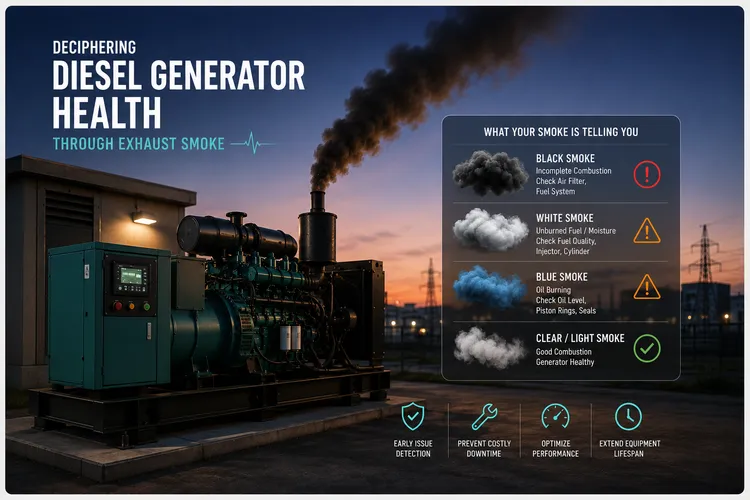
White Smoke — Unburned Fuel
White smoke is typically caused by unburned diesel fuel. This often happens when:
- The engine has not reached optimal operating temperature
- Fuel injectors are malfunctioning
- Compression is insufficient
In colder conditions, brief white smoke during startup may be normal. Persistent white smoke, however, usually requires inspection of injectors, glow plugs, or fuel delivery systems.
Blue Smoke — Burning Oil
Blue smoke generally indicates that engine oil is entering the combustion chamber. Common causes include:
- Worn piston rings
- Damaged valve seals
- Cylinder wear
Ignoring blue smoke can lead to severe engine degradation and increased operational costs.
Black Smoke — Incomplete Combustion
Black smoke signals an imbalance in the air-to-fuel ratio, resulting in incomplete combustion. Typical causes include:
- Clogged air filters
- Over-fueling
- Faulty injectors
- Turbocharger issues
Routine maintenance and airflow inspection are essential to prevent black smoke and maintain fuel efficiency.
Why Exhaust Monitoring Matters
Monitoring exhaust smoke provides several operational benefits:
- Early fault detection
- Reduced unplanned downtime
- Improved fuel efficiency
- Lower maintenance costs
- Extended generator lifespan
- Better environmental compliance
For facilities relying on continuous power — including data centers, hospitals, and industrial operations — early detection can prevent costly outages.
Preventive Maintenance Best Practices
To ensure diesel generators remain healthy and reliable:
Regular Inspection
Perform scheduled inspections of:
- Air filters
- Fuel injectors
- Oil levels
- Cooling systems
Load Testing
Conduct periodic load testing to ensure generators operate correctly under real demand conditions.
Oil Analysis
Routine oil analysis can identify contamination, wear metals, and early component degradation.
Emissions Monitoring
Modern emissions systems and diesel particulate filters help reduce environmental impact while improving engine performance.
Conclusion
Exhaust smoke serves as a powerful diagnostic tool for diesel generator maintenance. By understanding what different smoke colors indicate, operators can take proactive action before minor issues evolve into critical failures.
In uptime-critical environments, predictive maintenance and continuous monitoring are no longer optional — they are essential strategies for operational resilience.