
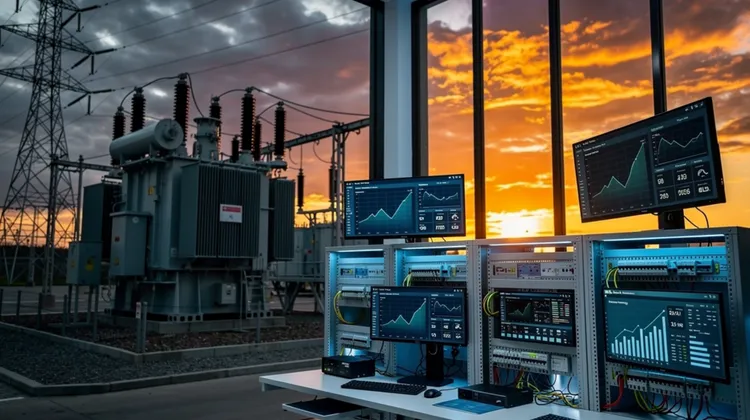
The era of reliable, always-on grid power is ending for many regions. South Africa’s load-shedding, rolling blackouts in California, and grid strain across Europe and Asia have forced a fundamental shift in how critical industries approach uptime. The question is no longer if an outage will occur, but when—and how your facility will respond. For plant managers, reliability engineers, and infrastructure operators, this new reality demands a design philosophy that treats power interruption as a design parameter, not an anomaly.
Understanding the New Threat Landscape
Traditional uptime planning assumed grid power was 99.9% reliable. That assumption is obsolete. Load-shedding schedules can be unpredictable, with outages lasting 2 to 4 hours at a time, multiple times per day. In extreme cases, facilities face 10 to 12 hours of cumulative darkness. This is not a maintenance issue; it is a systemic infrastructure challenge.
The financial impact is staggering. A single hour of downtime at a mid-sized manufacturing plant costs between $100,000 and $500,000 in lost production, depending on the industry. For data centers, that figure can exceed $1 million per hour. These numbers do not account for secondary effects: spoiled inventory, regulatory penalties, and reputational damage.
Designing for Resilience: The New Standard
1. Layered Power Architecture
The most effective blackout strategy is not a single massive generator—it is a layered approach. Think of it as a series of concentric circles, each providing a different response time and duration.
First layer: Uninterruptible Power Supply (UPS)
UPS systems bridge the gap between grid failure and generator startup. Modern lithium-ion UPS units provide 5 to 15 minutes of runtime, enough to handle momentary sags and switchovers. They also condition power, protecting sensitive electronics from voltage spikes and frequency fluctuations that are common during load-shedding.
Second layer: Standby Generation
Diesel or gas generators handle extended outages. The key is proper sizing and testing. A generator that runs under 30% load for extended periods suffers from wet stacking, where unburned fuel contaminates the exhaust system. This reduces efficiency and increases maintenance costs. Design your generator to handle at least 60% of your critical load, and conduct monthly loaded testing.
Third layer: Energy Storage Battery energy storage systems (BESS) are emerging as a viable alternative to traditional generators. They respond in milliseconds, produce no emissions, and have lower operational costs over time. For facilities with solar arrays, BESS allows for islanding—operating independently from the grid during daytime hours.
2. Smart Load Shedding and Prioritization
You cannot power everything during a blackout, and you should not try. Effective blackout design requires a clear understanding of what must run, what can run at reduced capacity, and what can wait.
Critical loads: Life safety systems, HVAC for server rooms, process control systems, and communication networks. These require 100% uptime.
Essential loads: Production lines, lighting in work areas, and security systems. These can run at reduced capacity or cycle on and off.
Deferrable loads: Warehousing, non-critical HVAC, and administrative areas. These can be offline for hours without consequence.
Implement automatic load-shedding controllers that disconnect non-critical circuits when the generator kicks in. This prevents overloading and extends generator runtime by up to 30%.
3. Predictive Maintenance for Outage Readiness
Reactive maintenance is a recipe for disaster in the blackout era. The facilities that weather load-shedding best are those that predict equipment failure before it happens.
Vibration analysis on rotating equipment, thermal imaging on electrical connections, and oil analysis on generators can identify issues weeks before they cause failure. For example, a 10-degree Celsius increase in transformer temperature indicates a 50% reduction in insulation life. Catching this early allows you to schedule repairs during scheduled outages rather than emergency shutdowns.
According to a study by the U.S. Department of Energy, predictive maintenance can reduce maintenance costs by 25% to 30%, eliminate 70% to 75% of breakdowns, and reduce downtime by 35% to 45%. These statistics are even more critical when every unplanned outage risks a cascading failure across your power infrastructure.
The Role of Microgrids in Blackout Resilience
For facilities that cannot tolerate any downtime, microgrids offer the ultimate protection. A microgrid is a localized power system that can operate independently from the traditional grid. It typically combines solar, battery storage, and a generator, managed by a sophisticated controller.
During normal operation, the microgrid connects to the main grid, purchasing power when prices are low and selling excess solar generation back. When the grid fails, the microgrid disconnects (islands) and continues powering critical loads indefinitely.
The initial investment is substantial—a typical industrial microgrid costs $2 million to $5 million per megawatt of capacity. However, when you factor in avoided downtime costs, reduced energy expenses, and potential revenue from grid services, the payback period is often under five years.
Case Study: How a Hospital System Survived Load-Shedding
A major hospital network in South Africa faced a crisis when load-shedding intensified in 2023. Their existing backup system—a single diesel generator—was insufficient. Extended outages meant the generator ran continuously for 12-hour stretches, requiring maintenance every 250 hours instead of the recommended 500.
Their solution was a three-phase approach:
- Installed a 1 MWh lithium-ion battery system to handle peak shaving and provide seamless transition during generator startup.
- Upgraded to a dual-generator configuration with automatic paralleling, allowing one unit to be serviced while the other runs.
- Implemented a building management system that automatically sheds non-critical loads and optimizes generator loading.
The result? The hospital maintained 99.99% uptime during the worst load-shedding period in the country's history, protecting patients and maintaining critical operations.
Practical Steps for Your Facility
Assessing your blackout resilience does not require a complete overhaul. Start with these steps:
Conduct a power audit. Map your electrical loads, identify critical systems, and document current backup capabilities. This baseline is essential for any improvement plan.
Prioritize your loads. Work with operations teams to categorize every circuit as critical, essential, or deferrable. This exercise alone often reveals opportunities for efficiency.
Test your systems monthly. A generator that starts reliably every time is a myth. Monthly loaded testing under real conditions is non-negotiable.
Invest in monitoring. Remote monitoring platforms provide real-time visibility into power quality, generator status, and battery health. These systems alert you to issues before they become failures.
Plan for the human factor. Your engineers and technicians need clear procedures for outage response. Conduct regular drills and post-incident reviews to refine your approach.
The Cost of Inaction
Some facility managers view blackout planning as an unnecessary expense—until the first major outage. The reality is that the cost of resilience is a fraction of the cost of failure.
Consider the math: A $500,000 investment in battery storage and generator upgrades seems significant. But if that investment prevents just one 8-hour outage at a plant generating $200,000 per hour in revenue, the payback is immediate.
More importantly, the reputational damage from failing to deliver during a crisis can be permanent. In an era where customers and regulators demand reliability, blackout resilience is a competitive advantage.
Building for an Uncertain Future
The blackout era is not a temporary disruption; it is a structural shift in how we think about power. Climate change is increasing grid stress, aging infrastructure is becoming less reliable, and energy demand continues to rise.
The facilities that thrive in this environment are those that treat power resilience as a core business function, not an afterthought. They invest in layered power architecture, embrace predictive maintenance, and design for the worst-case scenario.
The technology exists today to keep your operations running through any outage. The question is whether you have the foresight to implement it before the next blackout hits.
Your competitors are already making these investments. The only question is whether you will be leading the charge or scrambling to catch up when the lights go out.