
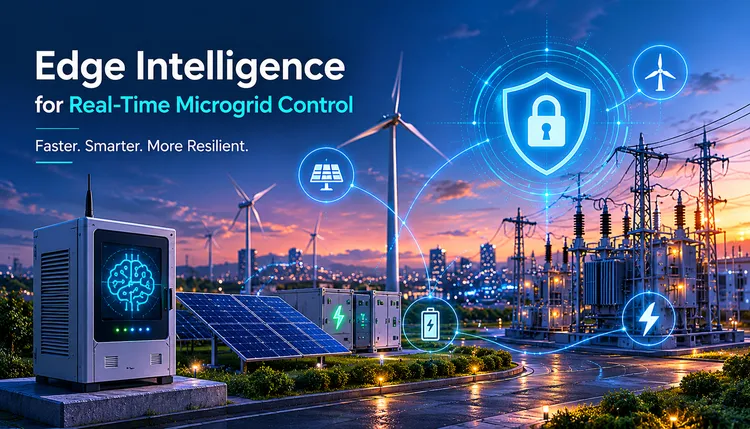
The Global Shift Toward Distributed Energy
The global energy industry is rapidly shifting toward decentralized infrastructure powered by solar farms, battery systems, smart grids, and EV charging networks. These Distributed Energy Resources (DERs) are transforming how electricity is generated and consumed, creating a cleaner and more resilient energy ecosystem.
However, this transformation also introduces a major cybersecurity challenge.
Every connected inverter, smart meter, battery controller, and IoT device becomes a potential entry point for cyber attackers. Unlike traditional cyber threats that target only digital systems, attacks on DER infrastructure can create real-world physical consequences — including power outages, equipment damage, and grid instability.
The Expanding Attack Surface
Traditional power grids relied on centralized power plants and substations protected by clearly defined security boundaries.
Modern distributed energy systems are different.
Today’s grid includes millions of connected edge devices such as:
- Residential solar systems
- Smart inverters
- EV charging stations
- Battery storage systems
- IoT-enabled grid sensors
Each connected device increases operational complexity and expands the grid’s attack surface.
The Risk of Cyber-Physical Attacks
Cyber attacks on energy infrastructure are uniquely dangerous because digital compromises can directly impact physical systems.
If attackers gain control over large groups of DER devices, they could:
- Manipulate voltage levels
- Disrupt grid frequency
- Trigger cascading failures
- Cause regional blackouts
As distributed infrastructure grows, preventing these threats becomes increasingly critical.
Why Zero-Trust Security Matters
Traditional perimeter-based cybersecurity models are no longer enough for decentralized infrastructure.
This is why utilities and infrastructure operators are adopting:
Zero-Trust Architecture (ZTA)
Never trust. Always verify.
Every device and system request must be continuously authenticated before gaining access to critical infrastructure.
Key Zero-Trust Strategies
Micro-Segmentation
Networks are divided into isolated zones so attackers cannot easily move between systems if one device is compromised.
Identity and Access Management (IAM)
Every device requires a secure digital identity and authenticated access controls.
Least Privilege Access
Devices and users receive only the minimum permissions required for their tasks.
These strategies reduce the impact of breaches and improve overall grid resilience.
AI-Powered Threat Detection
Modern attacks increasingly bypass traditional security systems.
Artificial Intelligence and Machine Learning help utilities detect:
- Abnormal network traffic
- Suspicious device behavior
- Unexpected voltage fluctuations
- Unusual communication patterns
AI-driven monitoring allows operators to identify and isolate threats before they escalate into large-scale failures.
Best Practices for Securing DER Infrastructure
Organizations should prioritize:
- Continuous monitoring
- Regular firmware updates
- Secure communication protocols
- Hardware-root-of-trust security
- Cyber-physical simulation exercises
Security must be integrated into infrastructure design from the beginning — not added later.
The Future of Energy Security
As renewable energy adoption accelerates, cybersecurity will become one of the most important pillars of grid reliability.
The future power grid must be:
- Intelligent
- Resilient
- Decentralized
- Secure by design
Protecting Distributed Energy Resources is no longer just an IT responsibility — it is essential for ensuring energy stability, operational continuity, and national infrastructure resilience.