
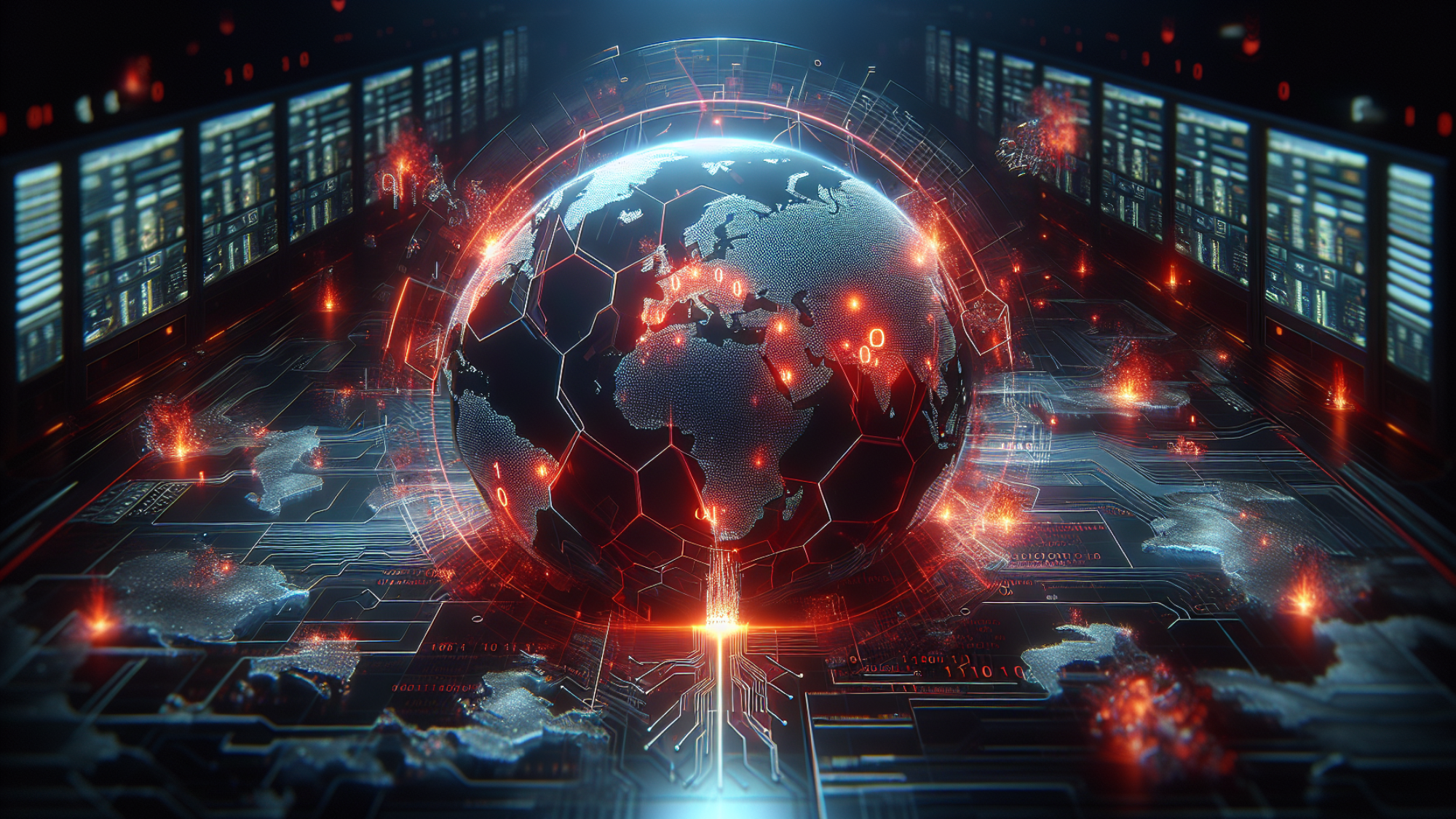
In an era where our lives are inextricably linked to the digital realm, the concept of a “weapon” has evolved. We no longer just fear physical projectiles; we fear lines of code that can dismantle power grids, freeze hospital operations, and wipe out billions of dollars in a single afternoon. Cyber warfare is no longer a plot point in a science fiction novel—it is a present-day reality that has already caused catastrophic damage across the globe.
When we discuss the “most dangerous” cyber attacks, we aren’t just talking about stolen credit card numbers or leaked passwords. We are looking at incidents that threatened national security, paralyzed critical infrastructure, and demonstrated how vulnerable our modern world truly is. By examining these digital milestones, we can better understand the evolving threat landscape and what it takes to protect our collective future.
The Ghost in the Machine: Stuxnet (2010)
Many experts agree that the world’s first truly “dangerous” cyber attack was Stuxnet. This was not a move for financial gain; it was a sophisticated piece of digital weaponry designed for physical destruction. Discovered in 2010, Stuxnet was a malicious computer worm specifically engineered to target SCADA (Supervisory Control and Data Acquisition) systems.
Its primary target was Iran’s nuclear program, specifically the Natanz uranium enrichment plant. Stuxnet was revolutionary because it was designed to jump the “air gap”—infecting systems that were not even connected to the internet. It spread via infected USB drives and eventually manipulated the frequency of the centrifuges, causing them to spin out of control and self-destruct while reporting to the operators that everything was functioning normally.
Stuxnet set a terrifying precedent: code could now cause physical kinetic damage. It proved that a nation’s critical infrastructure could be dismantled from a keyboard thousands of miles away.
The $10 Billion Nightmare: NotPetya (2017)
If Stuxnet was a precision sniper, NotPetya was a global carpet bombing. Originally masquerading as ransomware, NotPetya was actually a “wiper” designed to cause maximum disruption. It began by targeting Ukrainian accounting software but quickly spiraled out of control, spreading to multinational corporations like Maersk, FedEx, and Merck.
The scale of the damage was unprecedented. The shipping giant Maersk saw its entire global network paralyzed, forcing them to reinstall 4,000 servers and 45,000 PCs in just ten days. The White House later estimated that NotPetya caused over $10 billion in total damages globally, making it the most financially destructive cyber attack in history. It highlighted a crucial vulnerability: the interconnectedness of the global supply chain means that a localized attack can have immediate, devastating ripple effects across every continent.
A Crisis of Care: The WannaCry Ransomware (2017)
While NotPetya focused on corporations, WannaCry targeted the systems we rely on for our very lives. In May 2017, this ransomware exploit ripped through 150 countries, infecting over 200,000 computers in a matter of hours.
The most heart-wrenching impact was seen in the United Kingdom’s National Health Service (NHS). The attack forced hospitals to turn away patients, cancel over 19,000 appointments, and divert ambulances. Doctors were locked out of critical patient records, and diagnostic equipment became useless.
WannaCry used a vulnerability known as “EternalBlue,” which had been leaked from the U.S. National Security Agency (NSA). This attack served as a wake-up call for healthcare technology sectors everywhere: outdated legacy systems are not just a technical debt; they are a life-and-death liability.
The Invisible Infiltrator: SolarWinds (2020)
In late 2020, the cybersecurity world was rocked by the discovery of a “supply chain attack” of staggering proportions. Sophisticated hackers managed to insert malicious code into a software update for SolarWinds’ Orion platform—a tool used by thousands of organizations to manage their networks.
Because the update was digitally signed and appeared legitimate, approximately 18,000 customers downloaded the “backdoor.” The victims included multiple branches of the U.S. government, including the Treasury, Commerce, and Homeland Security departments, as well as dozens of Fortune 500 companies.
The SolarWinds attack was dangerous because of its stealth. The attackers remained undetected for months, quietly observing and stealing data. It taught the world that you don’t just have to trust your own security; you have to trust the security of every single software vendor you use.
Paralyzing the Pump: The Colonial Pipeline (2021)
While previous attacks often felt abstract to the general public, the Colonial Pipeline hack brought the threat home to the average citizen. A ransomware attack by the group DarkSide targeted the billing system of the largest fuel pipeline in the United States.
Fearing the hackers could gain control of the physical pipeline operations, the company shut down the entire system. This led to fuel shortages across the East Coast, panic buying, and a spike in gas prices. It was a stark demonstration of how a cyber attack on a “soft” target—business systems—can force a shutdown of critical “hard” infrastructure, affecting the daily lives of millions.
Shocking Statistics: The Scale of the Threat
To understand the gravity of these attacks, we must look at the data surrounding modern cyber threats:
- Financial Impact: The global cost of cybercrime is expected to reach $10.5 trillion annually by 2025.
- Frequency: It is estimated that a ransomware attack occurs every 11 seconds.
- Healthcare Vulnerability: 60% of healthcare organizations reported being hit by ransomware in the last year alone.
- Recovery Costs: The average cost to recover from a ransomware attack, including downtime and lost opportunity, is roughly $1.82 million.
Why These Attacks Are Becoming More Dangerous
The danger of cyber attacks is accelerating due to several converging factors. First is the rise of “Cybercrime-as-a-Service” (CaaS), where sophisticated hacking tools are sold on the dark web, allowing even low-level criminals to launch high-impact attacks.
Second is the integration of AI. Attackers are now using artificial intelligence to automate the scouting of vulnerabilities and to create highly convincing phishing campaigns. This “AI-on-AI” warfare means that traditional security measures are often one step behind.
Finally, the expansion of the Internet of Things (IoT) has exponentially increased the “attack surface.” Every smart thermostat, industrial sensor, and connected medical device is a potential entry point for a malicious actor.
Building Resilience: Moving Forward
We cannot completely eliminate the risk of cyber attacks, but we can build systems that are resilient enough to survive them. This requires a shift from a “fortress” mentality (trying to keep everyone out) to a “zero-trust” architecture (assuming the breach has already happened).
Key strategies for modern digital defense include:
- Multi-Factor Authentication (MFA): Implementing robust identity verification across all platforms.
- Air-Gapped Backups: Ensuring that critical data backups are not connected to the main network.
- Supply Chain Auditing: Rigorous security vetting of all third-party software and service providers.
- Employee Training: Recognizing that the “human firewall” is often the weakest link in any security chain.
The history of the world’s most dangerous cyber attacks is a sobering reminder of our vulnerability. However, it also serves as a roadmap for improvement. By learning from the failures of the past, we can build a more secure and stable digital future.
Is your organization prepared for the next wave of digital threats? Don’t wait for a breach to discover your vulnerabilities. Invest in proactive monitoring, robust backup strategies, and a culture of security today to ensure your infrastructure remains resilient tomorrow. Reach out to our experts for a comprehensive security audit and take the first step toward true operational excellence.