
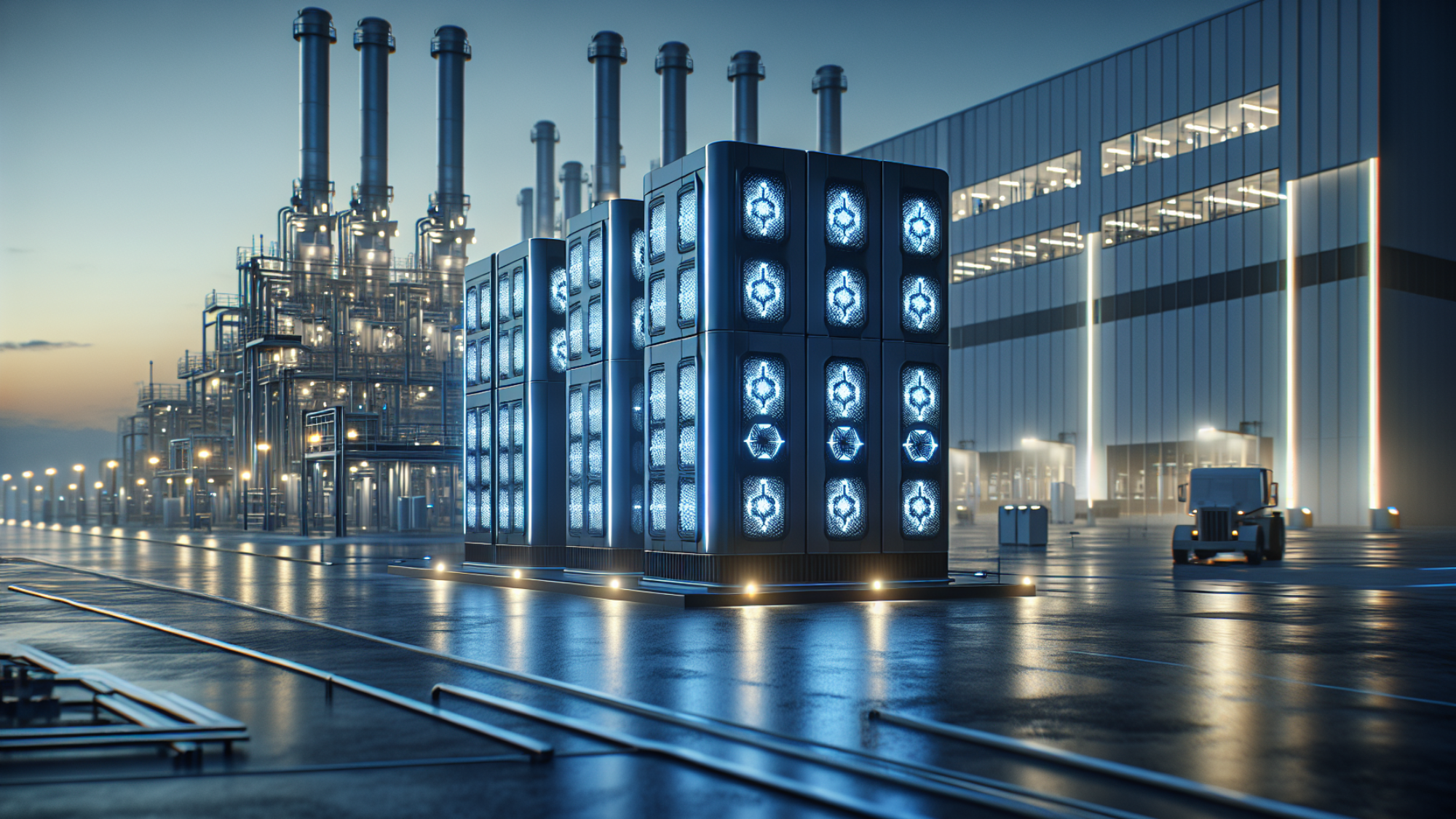
For decades, the standard for industrial backup power has been the diesel generator. It is loud, heavy, and smells of combustion, but it has been the bedrock of mission-critical reliability. When the grid fails, the diesel engine kicks in, providing the immediate surge of power necessary to keep data centers running, manufacturing lines moving, and life-saving medical equipment active.
However, the landscape of industrial operations is undergoing a seismic shift. As global regulatory frameworks tighten and corporate ESG (Environmental, Social, and Governance) mandates move from “optional” to “essential,” the carbon footprint of emergency power can no longer be ignored. Transitioning to carbon-neutral operations requires more than just solar panels on the roof; it requires a fundamental rethink of how we handle energy during a crisis. This is where hydrogen fuel cells are emerging not just as an alternative, but as the new standard for resilient, clean backup power.
The Limitations of the Diesel Era
While diesel generators are reliable, they are increasingly becoming a liability in a decarbonizing economy. There are three primary pain points that industrial leaders are currently facing:
- Environmental Compliance: Diesel combustion releases nitrogen oxides (NOx), sulfur oxides (SOx), and particulate matter. As cities implement “clean air zones” and carbon taxes become more prevalent, the cost of running diesel-based backup systems will continue to rise.
- Maintenance Complexity: Diesel engines are mechanical beasts. They require regular oil changes, filter replacements, and fuel stabilization treatments. Because they are often “emergency only” assets, they can suffer from “dormant failure”—where a machine fails exactly when it is needed most due to neglected maintenance.
- The Logistics of Fuel Storage: Storing large quantities of diesel on-site presents fire safety risks and requires constant monitoring to prevent fuel degradation over time.
How Hydrogen Fuel Cells Redefine Emergency Power
Unlike a generator that burns fuel to create mechanical motion, a hydrogen fuel cell uses an electrochemical reaction to produce electricity. By combining hydrogen with oxygen from the ambient air, the cell generates a steady stream of electrons. The only byproducts of this reaction are heat and pure water vapor.
For mission-critical industrial systems, this technology offers several transformative advantages.
Unmatched Reliability Through Simplicity
One of the greatest strengths of a fuel cell is its lack of moving parts. Traditional generators rely on pistons, crankshafts, and complex cooling systems. Every moving part is a potential point of failure. In contrast, a fuel cell is a solid-state technology. This simplicity translates to significantly lower mechanical failure rates and a much longer operational lifespan with minimal maintenance requirements.
Silent, Seamless Operation
In many industrial or urban settings, noise pollution is a significant concern. Diesel generators are notoriously loud, often requiring expensive acoustic enclosures. Hydrogen fuel cells operate almost silently. Furthermore, fuel cells can provide a seamless transition from grid power to backup power, avoiding the “voltage dip” often experienced during the few seconds it takes a diesel engine to crank and stabilize.
Long-Duration Energy Storage
A common critique of battery energy storage systems (BESS) is their limited discharge duration. While lithium-ion batteries are excellent for short-term frequency regulation or brief outages, they struggle to support heavy industrial loads for several days. Hydrogen, however, is an incredible medium for long-duration energy storage. By storing hydrogen in tanks, an industrial site can maintain power for days or even weeks, providing a level of resilience that batteries simply cannot match.
The Feasibility Gap: Comparing the Contenders
To understand why hydrogen is gaining traction, we must look at how it stacks up against the existing players in the backup power market.
| Feature | Diesel Generators | Battery (BESS) | Hydrogen Fuel Cells |
| :— | :— | :— | :— |
| Carbon Footprint | High | Low (if green-charged) | Zero (if green hydrogen) |
| Maintenance | High (Mechanical) | Low (Solid State) | Low (Solid State) |
| Noise Level | Very High | Very Low | Very Low |
| Duration | High (Fuel dependent) | Low to Medium | Very High |
| Start-up Time | Seconds | Milliseconds | Milliseconds to Seconds |
While batteries are winning the race for short-term, high-cycle applications, hydrogen is positioning itself as the heavy-duty solution for long-term energy security.
The Challenge of “Green” vs. “Grey” Hydrogen
It is important to note that the carbon-neutrality of a hydrogen system depends entirely on the source of the hydrogen.
- Grey Hydrogen: Produced from natural gas through steam methane reforming. While cleaner at the point of use, it still carries a significant carbon footprint during production.
- Blue Hydrogen: Produced from natural gas, but with carbon capture and storage (CCS) technologies applied.
- Green Hydrogen: Produced via electrolysis powered by renewable energy (wind, solar, or hydro).
For an industrial facility looking to achieve true Net Zero status, the integration of Green Hydrogen is the only viable path. As the cost of electrolyzers continues to drop—predicted by some analysts to fall by over 60% by 2030—the economic feasibility of green hydrogen is rapidly approaching the tipping point.
Implementing the Transition: A Strategic Roadmap
Transitioning a mission-critical site from diesel to hydrogen does not have to happen overnight. A phased approach allows for risk mitigation and capital management.
- The Hybrid Phase: Implement a hybrid system where hydrogen fuel cells handle the base load or provide supplemental power alongside existing diesel assets. This provides a “safety net” while testing the hydrogen supply chain.
- The Microgrid Integration: Connect fuel cells into a site-wide microgrid. This allows the fuel cells to work in tandem with onsite solar or wind, using excess renewable energy to produce hydrogen via electrolysis, effectively turning your backup system into an energy storage asset.
- Full Decarbonization: As hydrogen infrastructure matures and the cost of green hydrogen stabilizes, the diesel assets can be decommissioned entirely, leaving a fully carbon-neutral, highly reliable power architecture.
The Bottom Line
The shift toward hydrogen fuel cells is no longer a matter of “if,” but “when.” As industrial leaders face increasing pressure to decarbonize without compromising on uptime, the reliability and long-duration capabilities of hydrogen offer a compelling solution. The transition represents a move away from the era of combustion and toward an era of electrochemical resilience.
Is your facility prepared for the transition to carbon-neutral emergency power? Contact our energy consultants today to begin your hydrogen feasibility assessment and future-proof your operations.