
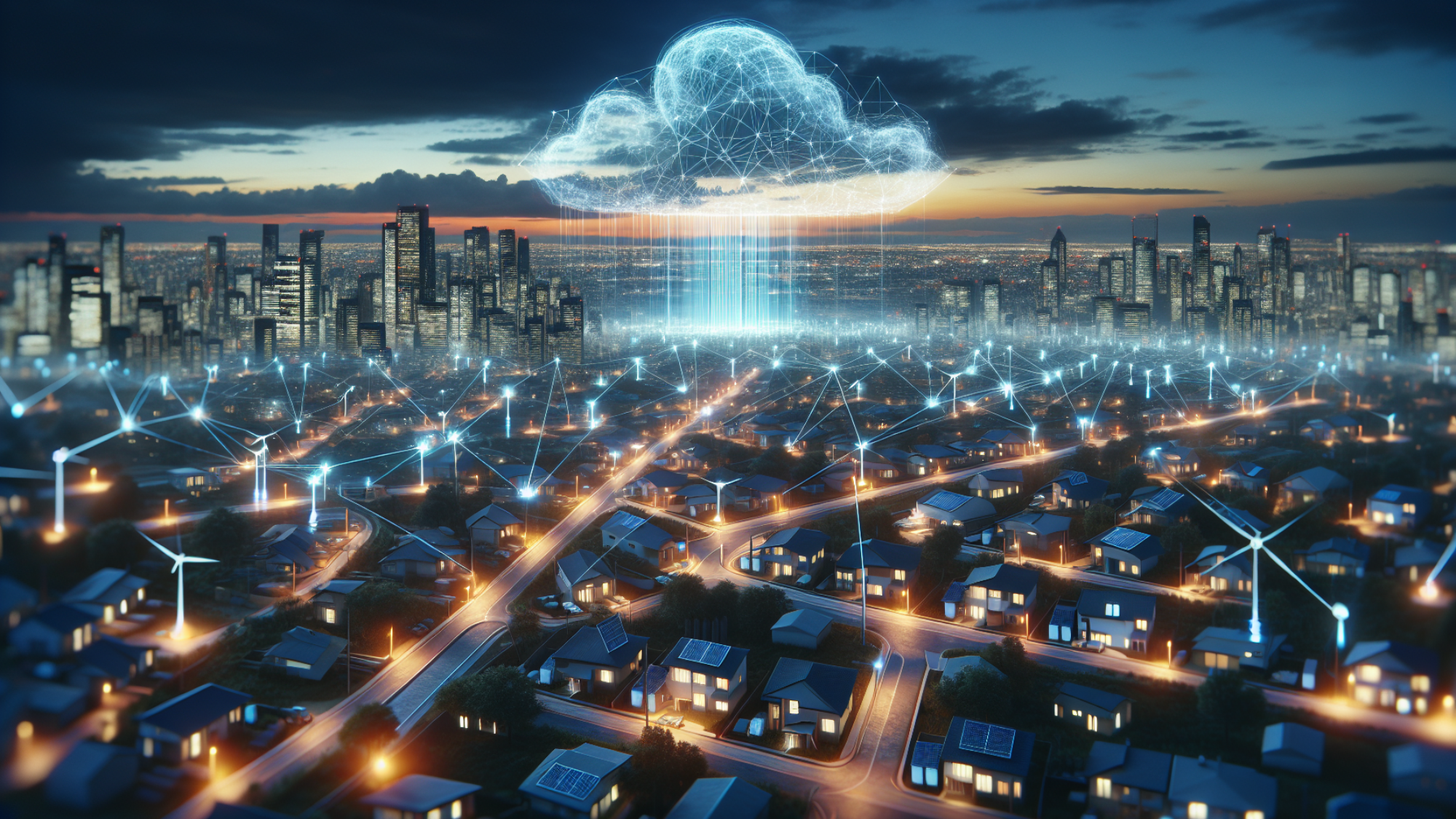
The traditional model of the electrical grid was built on a simple, linear principle: large, centralized power plants generate massive amounts of electricity, which is then pushed through high-voltage lines to passive consumers. This “top-down” approach worked for a century, but it is currently facing an existential challenge. As we transition toward a greener future, the grid is becoming increasingly fragmented. We are moving from a handful of massive generators to millions of small, intermittent sources—solar panels on rooftops, wind farms in the ocean, and electric vehicle (EV) batteries in garages.
This shift introduces a massive problem: volatility. Unlike a coal or gas plant, which can be dialed up or down predictably, the sun doesn’t always shine, and the wind doesn’t always blow. This creates imbalances in supply and demand that can threaten the very stability of the grid. This is where the concept of the Virtual Power Plant (VPP) enters the fray. A VPP isn’t a physical building; it is a digital ecosystem that orchestrates these millions of tiny, decentralized energy resources (DERs) to act as a single, reliable power plant.
What Exactly is a Virtual Power Plant?
At its core, a Virtual Power Plant is a cloud-based software platform that aggregates diverse Distributed Energy Resources (DERs) to provide services to the grid. Instead of building a new multi-billion dollar gas turbine to handle a sudden spike in demand, a VPP operator can send a signal to thousands of smart water heaters, home batteries, and EVs to slightly reduce their consumption or discharge stored energy back into the grid.
By doing this, the VPP transforms “prosumers”—consumers who also produce energy—into active participants in the energy market. It turns a chaotic collection of individual devices into a synchronized, high-performance asset capable of supporting the grid during critical moments.
The Four Pillars of VPP Architecture
To understand how a VPP functions, we must look beneath the surface at its four-layer architecture. This structure allows the system to scale from a few dozen devices to millions without collapsing under the weight of the data.
1. The Physical Layer (The Assets)
This is the hardware layer consisting of all the decentralized resources. This includes:
- Solar Photovoltaics (PV): Residential and commercial rooftop solar.
- Energy Storage Systems (ESS): Home batteries like the Tesla Powerwall or large-scale industrial storage.
- Electric Vehicles (EVs): Utilizing “Vehicle-to-Grid” (V2G) technology to use car batteries as grid buffers.
- Demand-Side Resources: Smart appliances, HVAC systems, and industrial machinery that can be modulated.
2. The Communication and IoT Layer (The Nervous System)
For a VPP to work, the “brain” must be able to talk to the “limbs.” This layer relies on the Internet of Things (IoT) and advanced communication protocols (such as IEEE 2030.5 or OpenADR). Whether via Wi-Fi, cellular (5G), or Zigbee, this layer ensures that data flows seamlessly between the physical device and the central controller. The speed of this layer is critical; when the grid needs a response, milliseconds matter.
3. The Cloud Orchestration Layer (The Brain)
This is the most critical component of the architecture. Hosted on cloud platforms like AWS or Azure, this layer utilizes Artificial Intelligence (AI) and Machine Learning (ML) to perform complex tasks:
- Forecasting: Predicting how much solar power will be produced in the next hour based on weather data.
- Optimization: Calculating the most cost-effective way to use stored battery energy.
- Aggregation: Grouping thousands of small assets into a single “block” of capacity that can be traded on the energy market.
4. The Market and Interface Layer (The Connection)
The final layer allows the VPP to interact with the outside world. This involves the interfaces used to communicate with Distribution System Operators (DSOs) and Transmission System Operators (TSOs). Through this layer, the VPP bids its capacity into wholesale energy markets, selling “ancillary services” like frequency regulation to keep the grid running smoothly.
Maintaining Grid Stability: The Role of Frequency Regulation
One of the most vital roles of a VPP is maintaining grid frequency. In most regions, the grid operates at a precise frequency (50Hz or 60Hz). This frequency is the “heartbeat” of the electrical system. If the demand for electricity exceeds the supply, the frequency drops; if supply exceeds demand, the frequency rises. Significant deviations can cause catastrophic equipment failure and widespread blackouts.
Traditional power plants use heavy spinning turbines to provide “inertia,” which helps stabilize frequency. However, solar panels and batteries have no physical inertia. A VPP solves this by providing “synthetic inertia” or rapid-response frequency regulation. Because battery-based assets can respond almost instantaneously, a VPP can inject or absorb power much faster than a traditional gas plant, acting as a high-speed shock absorber for the grid.
Why Cloud-Based Platforms are Non-Negotiable
In the past, energy management was localized. However, the scale of the modern energy transition requires a level of computing power that only the cloud can provide. There are three main reasons why cloud architecture is the backbone of the VPP movement:
- Scalability: As more homes install solar and EVs, a cloud-based VPP can scale its management capabilities instantly without needing to install new physical servers.
- Big Data Processing: To manage a VPP, you aren’t just managing electricity; you are managing massive streams of weather data, market pricing, consumer behavior patterns, and device health metrics. Cloud computing allows for the real-time processing of this “big data.”
- Edge Computing Integration: Modern VPP architecture often uses “edge computing,” where some processing happens locally on the device to reduce latency, while the heavy lifting is done in the cloud. This hybrid approach ensures both speed and intelligence.
The Challenges Ahead
Despite the immense potential, the path to a fully virtualized grid is not without hurdles.
- Interoperability: There is currently no single universal standard for how a smart dishwasher communicates with a grid controller. Without interoperability, VPPs struggle to aggregate diverse brands of hardware.
- Cybersecurity: A VPP is essentially a massive, distributed computer network. A cyberattack on the orchestration layer could theoretically allow a malicious actor to manipulate the grid.
- Regulatory Lag: Many energy markets were designed for centralized plants. Updating regulations to allow small-scale prosumers to compete fairly in wholesale markets is a slow and complex process.
The Future of Energy Orchestration
We are witnessing the birth of the “Software-Defined Grid.” As AI continues to evolve, VPPs will become even more autonomous. We can expect a future where your home energy system automatically negotiates with your neighbors to balance local demand, or where your EV proactively charges itself when it predicts a surplus of wind energy overnight.
The architecture of Virtual Power Plants represents more than just a technological upgrade; it represents a fundamental shift in how humanity relates to energy. We are moving from being passive consumers to active, intelligent participants in a global, decarbonized ecosystem.
Is your organization ready for the decentralized energy transition? Stay ahead of the curve by integrating smart, scalable energy management solutions today.