
For decades, the concept of street lighting was incredibly simple: a sensor detects darkness, a circuit closes, and a high-pressure sodium lamp hums to life. Once the sun rose, the system turned off. It was a “set it and forget it” utility that served its purpose but offered zero data, zero flexibility, and massive energy waste.
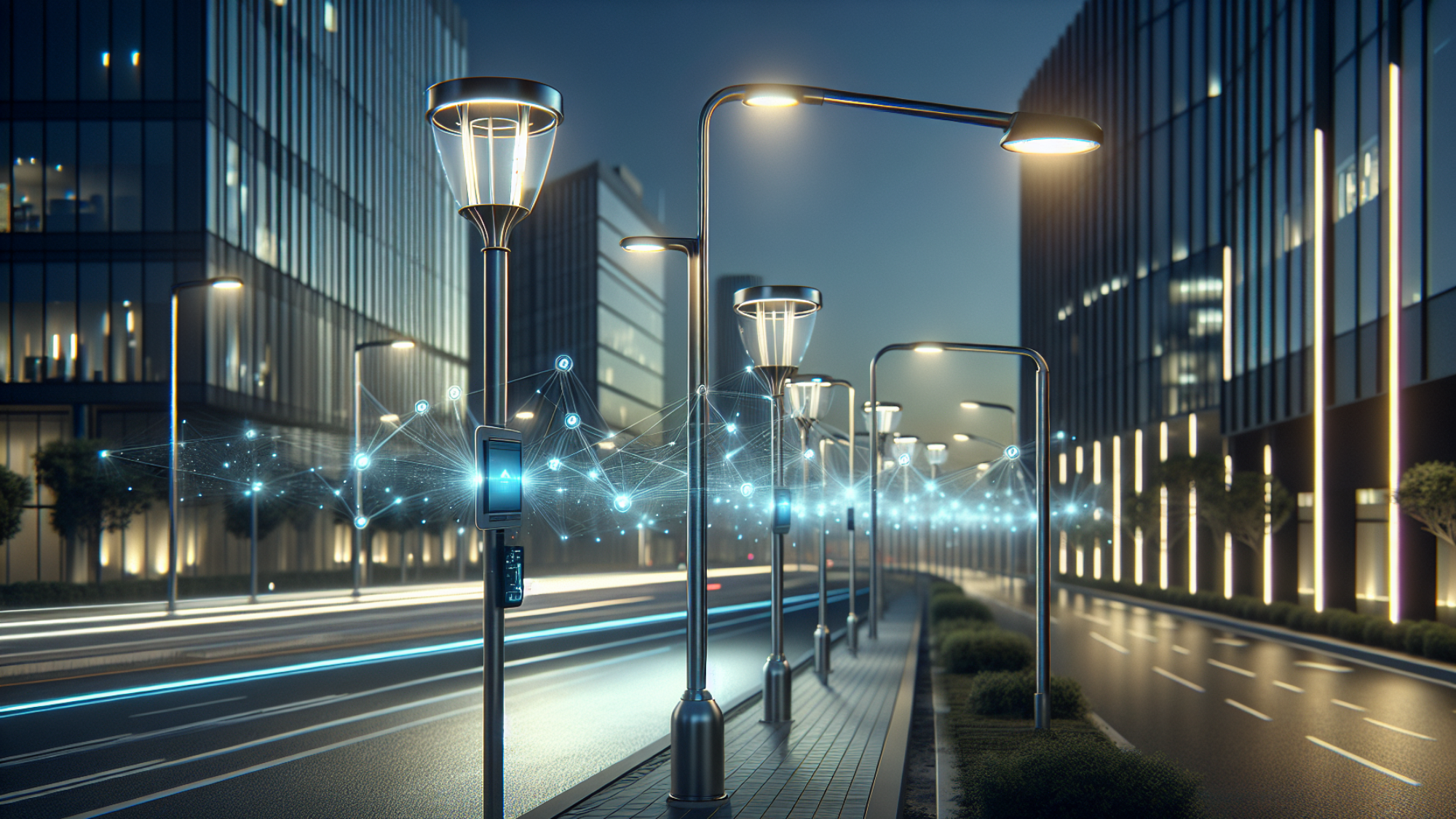
However, as we move deeper into the era of the “Smart City,” the humble street lamp is undergoing a radical transformation. No longer just a source of illumination, street lights are evolving into intelligent nodes—the nervous system of the modern urban environment. Smart street light solutions are merging lighting technology with the Internet of Things (IoT), turning every pole into a multi-functional tool for energy management, public safety, and data collection.
What Exactly Makes a Street Light “Smart”?
At its core, a smart street light is an integrated system that combines advanced LED technology with connectivity and intelligence. While a traditional light is a passive device, a smart light is an active participant in the city’s ecosystem.
To be classified as “smart,” a lighting solution typically requires three fundamental components:
- Advanced LED Luminaires: High-efficiency Light Emitting Diodes (LEDs) that provide superior brightness and longevity compared to legacy systems.
- IoT Connectivity: The ability to communicate via wireless protocols such as LoRaWAN, NB-IoT, Zigbee, or 5G. This allows the lights to “talk” to a central management system.
- Control Intelligence: Sensors and software that allow for dimming, scheduling, and real-time adjustments based on environmental data.
By combining these elements, municipalities can move away from static lighting schedules and toward dynamic, responsive environments.
The Technological Pillars of Smart Lighting
The transition to smart lighting isn’t just about changing a bulb; it’s about building a sophisticated digital infrastructure. Several key technologies drive this revolution.
1. Intelligent Dimming and Motion Sensing
One of the most significant inefficiencies in traditional lighting is that lights operate at 100% capacity even when streets are empty at 3:00 AM. Smart street light solutions utilize motion sensors and adaptive dimming. When no pedestrians or vehicles are detected, the lights can dim to 20% or 30% capacity, instantly saving energy. As soon as movement is detected, the system ramps up the brightness, ensuring safety without the waste.
2. IoT and Centralized Management Systems (CMS)
In a traditional setup, if a light burns out, a citizen often has to report it, or a technician must drive around performing manual inspections. With a Centralized Management System, every single light pole sends a “heartbeat” signal to a dashboard. If a lamp fails or a driver malfunctions, the system triggers an automatic alert. This shift from reactive to predictive maintenance can reduce operational costs by as much as 40%.
3. Multi-Sensor Integration
Modern smart poles are increasingly becoming “environmental hubs.” By mounting additional sensors on the lighting infrastructure, cities can collect vital data on:
- Air Quality: Monitoring CO2, NO2, and particulate matter levels.
- Traffic Flow: Using computer vision or radar to track vehicle density and speed.
- Acoustics: Detecting the specific sound frequency of a car crash or a gunshot to alert emergency services instantly.
- Weather Conditions: Real-time monitoring of humidity, temperature, and light levels.
The Economic and Environmental Impact
The argument for smart street lighting is as much about the balance sheet as it is about technology. For municipal leaders, the Return on Investment (ROI) is often the deciding factor.
Massive Energy Savings
The combination of LED efficiency and intelligent dimming creates a compounding effect on energy reduction. Industry statistics suggest that upgrading from high-pressure sodium (HPS) lamps to smart LED systems can reduce municipal lighting energy consumption by 50% to 70%. In a large-scale city deployment, these savings translate into millions of dollars in annual budget relief.
Reduced Carbon Footprint
Energy efficiency is the most direct path to sustainability. By slashing electricity consumption, cities significantly lower their greenhouse gas emissions. Furthermore, the extended lifespan of LED technology (often lasting 50,000 to 100,000 hours) reduces the waste associated with frequent bulb replacements and the manufacturing of new components.
Optimized Maintenance Budgets
As mentioned earlier, predictive maintenance is a game-changer. Instead of sending crews out on scheduled patrols—which is labor-intensive and fuel-heavy—cities can deploy technicians only when and where they are needed. This “just-in-time” approach to maintenance optimizes human resources and extends the lifecycle of the entire infrastructure.
Enhancing Urban Safety and Public Security
Beyond the numbers, smart street lighting has a profound impact on the human experience of a city. Lighting is one of the most effective tools for crime prevention and public safety.
Improved Visibility and Uniformity: Traditional lighting often results in “dark spots” between poles. Smart LED solutions provide much more uniform light distribution, eliminating shadows where criminal activity might hide and making it easier for CCTV cameras to capture clear footage.
Rapid Emergency Response: When integrated with emergency services, smart lighting can play an active role in crisis management. For instance, in the event of a detected accident, the street lights in the immediate vicinity can brighten to maximum intensity to assist first responders, or change color to guide emergency vehicles through a complex intersection.
Beyond Lighting: The Multi-Purpose Smart Pole
We are witnessing the birth of the “Smart Pole.” Because street lights are already strategically placed throughout urban grids and have access to power, they are the perfect host for other essential technologies.
- 5G Micro-cells: As the demand for high-speed data grows, the small cell architecture required for 5G is perfectly suited for mounting on street light poles.
- EV Charging Stations: Integrating Electric Vehicle (EV) charging ports into street light bases allows for curb-side charging, a necessity for urban residents who do not have private garages.
- Public Wi-Fi Hotspots: Smart poles can act as gateways for city-wide Wi-Fi, bridging the digital divide and providing connectivity to underserved areas.
Navigating the Challenges of Implementation
While the benefits are overwhelming, the transition to smart street lighting is not without hurdles. The initial Capital Expenditure (CapEx) for smart systems is higher than traditional lighting. Municipalities must also navigate complex issues regarding data privacy (ensuring sensor data doesn’t infringe on citizen privacy) and cybersecurity (protecting the lighting network from being hacked).
However, when viewed through the lens of long-term operational savings and the creation of a data-driven urban environment, these challenges are increasingly manageable through smart procurement and robust digital security frameworks.
Conclusion
Smart street light solutions represent a fundamental shift in how we view urban infrastructure. We are moving away from isolated, energy-hungry components toward an integrated, intelligent, and highly efficient network. By turning the lights on—literally and figuratively—cities can save money, protect the environment, and create safer, more connected communities for everyone.
Is your municipality or organization ready to transition to the next generation of urban infrastructure?