
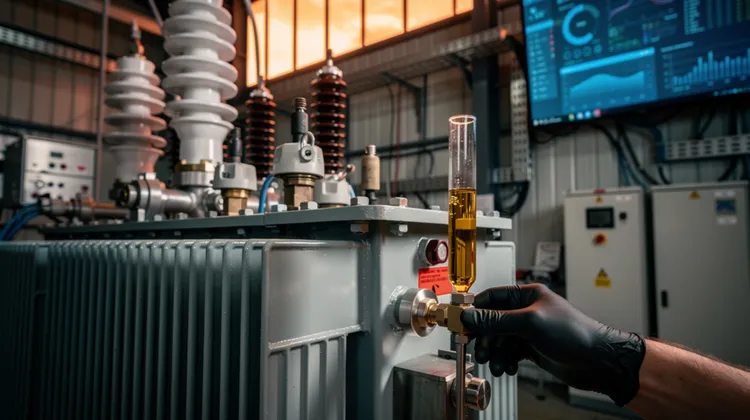
In the world of critical infrastructure, few assets are as vital—or as vulnerable—as the power transformer. These silent giants step voltage up and down across the grid, enabling the flow of electricity from generation to consumption. Yet their internal workings remain hidden, sealed inside tanks of insulating oil. For decades, maintenance teams relied on periodic inspections and the occasional thermal scan. But today, a more powerful tool has emerged: Dissolved Gas Analysis (DGA). By analyzing the gases dissolved in transformer oil, operators gain a real-time window into internal health, identifying faults like arcing, overheating, and partial discharge long before they escalate into catastrophic failures.
This is not just a technical upgrade. It is a paradigm shift in how we approach reliability in energy infrastructure.
Why Transformer Oil Analysis Matters
Transformer oil, also known as insulating oil, serves two primary functions: electrical insulation and heat dissipation. But as the transformer operates, thermal and electrical stresses cause the oil and paper insulation to break down. This decomposition produces characteristic gases that dissolve into the oil. Each type of fault generates a unique gas signature.
For example:
- Arcing produces hydrogen and acetylene.
- Overheating generates ethylene and methane.
- Partial discharge creates hydrogen and methane.
By extracting a small oil sample and analyzing it with gas chromatography or photoacoustic spectroscopy, technicians can identify the type and severity of a developing fault. This is the essence of DGA.
The Science Behind DGA
The key to DGA lies in understanding the gas generation mechanisms. When transformer oil—typically mineral oil—is subjected to thermal stress above 150°C, carbon-carbon bonds break, releasing hydrogen, methane, ethane, and ethylene. At temperatures exceeding 700°C, acetylene forms. Electrical discharges, from low-energy partial discharges to high-energy arcing, produce distinct ratios of hydrogen and acetylene.
Standardized methods like IEEE C57.104 and IEC 60599 provide guidelines for interpreting gas concentrations. The Duval Triangle and Key Gas Method are common diagnostic tools that plot gas ratios to pinpoint fault types. For instance, a high ratio of ethylene to methane suggests thermal heating, while elevated acetylene points to arcing.
Modern DGA systems go further. Online monitors continuously sample oil and report gas levels in real time, enabling predictive maintenance. This is especially critical for transformers in remote substations or high-voltage transmission lines where manual sampling is impractical.
Common Faults Detected by DGA
DGA can identify a range of internal faults before they cause outages:
- Thermal faults: Overheating of windings, core, or connections due to overload, poor cooling, or loose contacts.
- Electrical faults: Partial discharge, arcing, or sparking from insulation degradation, moisture ingress, or contamination.
- Cellulose degradation: Breakdown of paper insulation, indicated by carbon monoxide and carbon dioxide, which signals aging or overheating.
Each fault type has a distinct gas profile. For example, a transformer with high hydrogen and low acetylene may suffer from partial discharge, while one with high ethylene and methane likely has a hot spot.
Real-World Impact: Preventing Catastrophic Failures
The consequences of ignoring DGA are severe. A transformer failure can cost millions in replacement, lost revenue, and grid instability. In 2019, a major utility in the United States experienced a transformer explosion at a substation, causing a regional blackout and millions in damage. Post-incident analysis revealed elevated gas levels that had been overlooked during routine inspections.
Conversely, a proactive DGA program caught a developing fault in a 345 kV transformer at a Canadian hydroelectric plant. The gas signature indicated an overheated connection. The transformer was taken offline, repaired, and returned to service within weeks—avoiding a potential explosion and months of downtime.
According to a study by the Electric Power Research Institute (EPRI), DGA can reduce transformer failure rates by up to 50% when implemented as part of a comprehensive maintenance strategy.
Implementing a DGA Program
For operators looking to adopt DGA, the steps are straightforward:
- Baseline sampling: Collect an initial oil sample to establish normal gas levels for each transformer.
- Regular monitoring: Schedule quarterly or monthly sampling, or install online monitors for critical units.
- Trend analysis: Track gas concentrations over time. A sudden increase is more concerning than a steady state.
- Interpretation: Use established ratios and expert systems to diagnose faults.
- Action: If a fault is detected, plan maintenance or replacement before failure.
Online monitors offer the advantage of continuous data, but they require upfront investment. For smaller fleets, manual sampling with lab analysis remains cost-effective.
The Future of Transformer Monitoring
DGA is evolving. Advanced sensors now detect gases at parts-per-billion levels, and machine learning algorithms analyze trends to predict failure with increasing accuracy. Combined with other monitoring tools like partial discharge detection and thermal imaging, DGA forms the backbone of a holistic transformer health management system.
As the grid ages and renewable energy sources introduce new stresses, proactive diagnostics like DGA will become indispensable. The cost of a single transformer failure is too high to ignore.
Key Takeaways for Infrastructure Managers
- DGA provides early warning of internal faults, enabling preventive action.
- Gas signatures are specific to fault types, allowing targeted repairs.
- Online monitors offer real-time data, but manual sampling is still effective.
- A robust DGA program can cut failure rates by up to 50%.
In an era where uptime is everything, transformer oil analysis is not just a maintenance tool—it is a strategic asset. By looking inside the oil, we protect the grid that powers our world.