
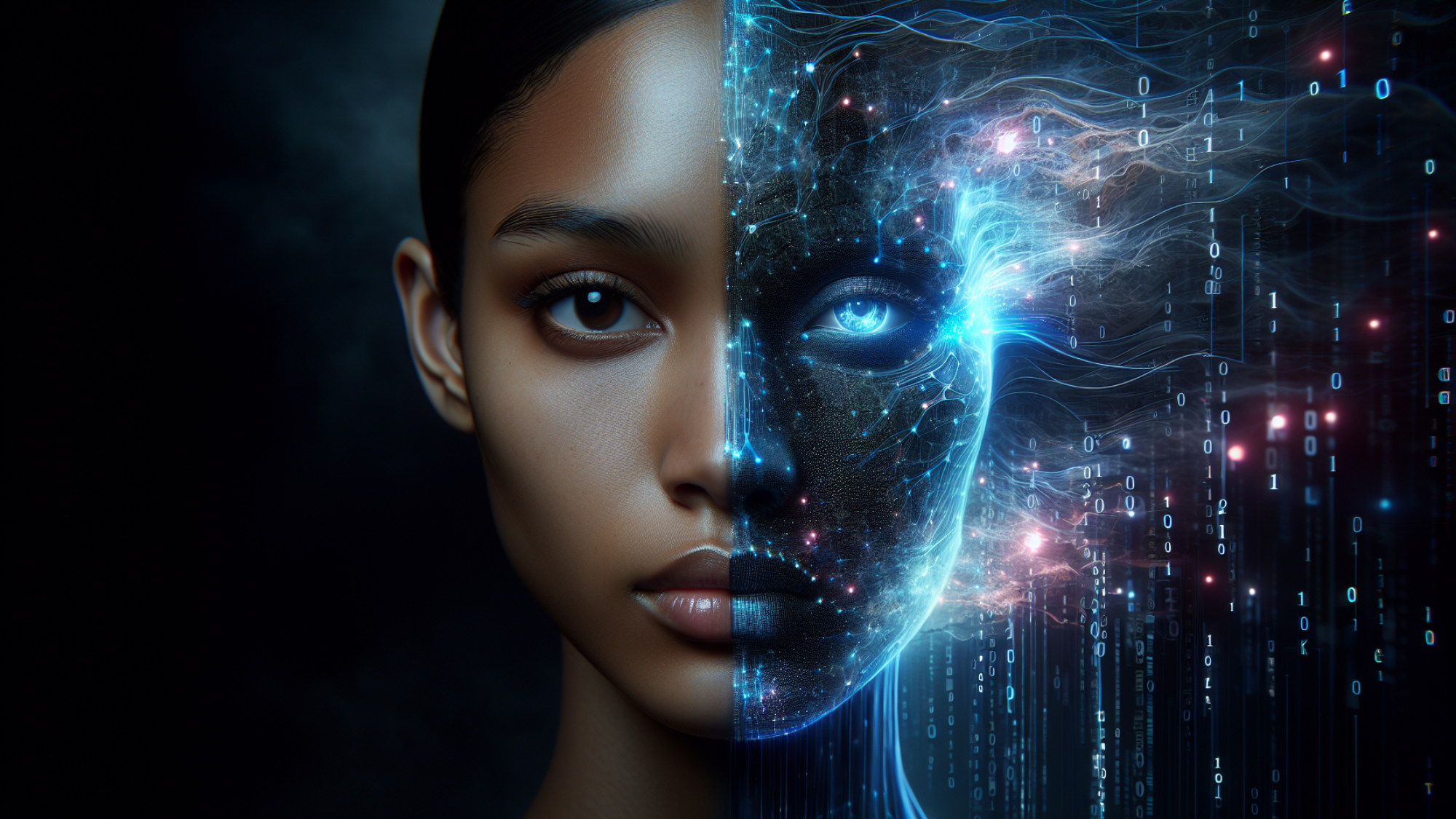
In an era where we are taught to “believe our eyes,” a new technological frontier is quietly dismantling that fundamental rule of human perception. We have entered the age of the deepfake—a term that describes highly convincing, AI-generated media that can make anyone appear to say or do anything. From political figures delivering speeches they never gave to celebrities appearing in commercials they never filmed, the boundary between reality and digital fabrication is blurring at an unprecedented rate.
Deepfakes are not just a passing digital trend; they are a byproduct of the rapid evolution of generative artificial intelligence. As these tools become more accessible and sophisticated, they present a profound paradox: they offer revolutionary creative possibilities while simultaneously posing one of the greatest threats to digital trust and cybersecurity in the 21st century.
The Engine Under the Hood: How Deepfakes Actually Work
To understand deepfakes, you must understand the architecture that powers them. At the heart of most deepfake technology lies a specific type of machine learning framework known as a Generative Adversarial Network (GAN).
Think of a GAN as a high-stakes game between two competing AI models:
- The Generator: This is the “artist” or the “forger.” Its goal is to create a piece of content (an image, a video, or a voice clip) that looks as real as possible. Initially, it produces nothing but digital noise, but it learns through trial and error.
- The Discriminator: This is the “detective” or the “critic.” Its job is to look at the content produced by the generator and compare it against real, authentic data. It tries to determine if the content is “real” or “fake.”
The magic happens through this constant competition. As the Generator tries to fool the Discriminator, it receives feedback on why it failed. It then adjusts its parameters to become more convincing. Simultaneously, the Discriminator becomes better at spotting even the tiniest flaws. This iterative loop continues millions of times until the Generator becomes so proficient that even a human eye—and sometimes even traditional software—cannot distinguish the fake from the truth.
The Dual Nature of Synthetic Media
The conversation around deepfakes is often dominated by fear, but it is important to recognize that this technology is “dual-use.” Much like a hammer can be used to build a home or cause harm, deepfakes have applications that range from the miraculous to the malicious.
The Creative and Beneficial Frontier
When harnessed ethically, deepfake technology (often referred to in professional circles as “synthetic media“) is a powerhouse for innovation:
- Entertainment and Film Production: Hollywood is already using AI-driven facial reconstruction to de-age actors or to “resurrect” performers for posthumous roles. This allows filmmakers to tell stories that were previously impossible due to the constraints of aging or mortality.
- Accessibility and Healthcare: For individuals losing their ability to speak due to neurodegenerative diseases like ALS, voice cloning technology can create a synthetic version of their original voice, allowing them to communicate with dignity rather than relying on robotic text-to-speech.
- Education and Historical Preservation: Imagine a history lesson where a high-fidelity digital recreation of a historical figure “speaks” to the class, providing a visceral, immersive learning experience.
- Localized Content: Deepfakes allow for seamless “automated dubbing,” where an actor’s lip movements are digitally altered to match the phonemes of a different language, making international cinema feel much more natural.
The Dark Side: Misinformation and Malice
The same ease of use that empowers artists also empowers bad actors. The “democratization” of AI means that powerful manipulation tools are now available to anyone with a decent GPU and an internet connection.
- Political Disinformation: Deepfakes can be used to create “fake news” that is visually undeniable. A fabricated video of a world leader declaring war or making a scandalous statement can trigger civil unrest or influence election outcomes before fact-checkers can even respond.
- Financial Fraud and Social Engineering: We are seeing a rise in “vishing” (voice phishing), where scammers use AI-cloned voices of CEOs or family members to authorize fraudulent wire transfers. In these cases, the emotional urgency of the “voice” bypasses the victim’s logical defenses.
- Non-Consensual Content: One of the most devastating uses of deepfake technology is the creation of non-consensual explicit imagery. This is a form of digital violence that disproportionately affects women and is used for harassment, extortion, and reputational destruction.
The Growing Scale of the Threat
The statistics surrounding this phenomenon are sobering. While exact numbers are difficult to track due to the decentralized nature of the internet, cybersecurity reports suggest a massive upward trend. Industry analysts have noted that the volume of deepfake content being uploaded to social media platforms is growing exponentially every year. Furthermore, the “cost of entry” for creating high-quality deepfakes has plummeted, moving from high-end research labs to consumer-grade software.
This shift has created a new “arms race” in the cybersecurity world: a continuous cycle of better generation tools versus better detection tools.
How to Protect Yourself: Identifying the Uncanny
As we navigate this new landscape, developing “digital literacy” is our best line of defense. While AI is getting better at hiding its tracks, it often leaves behind subtle “digital fingerprints.” When consuming highly sensitive or controversial media, look for these red flags:
- Unnatural Eye Movement: Does the person blink naturally? Do their eyes seem to track the environment, or do they appear static and “dead”?
- Lighting and Shadow Inconsistencies: Check if the light hitting the face matches the light in the background. Often, deepfakes struggle with complex reflections in eyes or shadows under the nose and chin.
- The “Edge” Problem: Look closely at the hairline and the jawline. In many deepfakes, there is a slight blurring or “shimmering” where the synthetic face meets the real head or neck.
- Audio-Visual Desync: Listen to the mouth movements. Is there a micro-delay between the sound of a consonant and the movement of the lips?
- Emotional Incongruity: Does the facial expression match the tone of the voice? Deepfakes often struggle to capture the micro-expressions that signal genuine human emotion, such as subtle squinting during a laugh.
The Path Forward: Ethics and Regulation
The future of the AI world depends on how we govern synthetic media. We cannot “un-invent” GANs, but we can build frameworks to manage them. This includes developing robust digital watermarking, implementing stricter legal penalties for malicious use, and fostering international cooperation on AI ethics.
As we move deeper into this era, our ability to discern truth from fabrication will become one of the most critical skills of the digital age. Staying informed and maintaining a healthy level of skepticism is not about being cynical—it is about being prepared.
How are you staying ahead of the curve in an AI-driven world? Share your thoughts on the ethics of synthetic media in the comments below!