
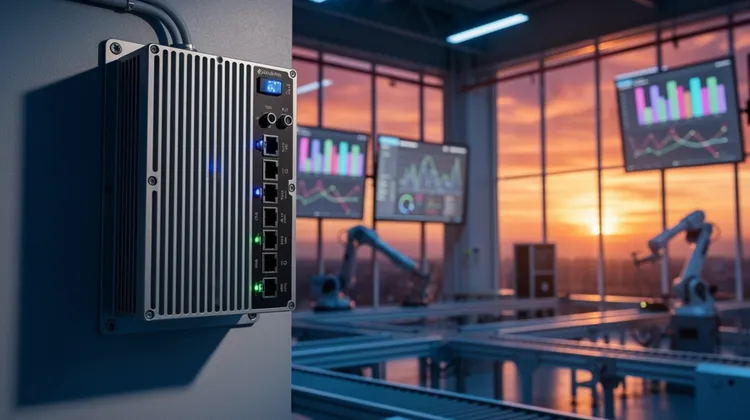
The push toward edge computing has fundamentally altered how critical industries think about reliability. For decades, the gold standard for uptime was the centralized data center—a fortress of redundancy, cooling, and controlled access. But as latency requirements shrink and data volumes explode, processing is migrating to the network edge. This shift demands a new definition of “always-on” architecture, one that accounts for thousands of geographically dispersed, often unstaffed nodes operating in harsh environments.
Edge nodes—whether they are small servers in a remote substation, industrial gateways on a factory floor, or compute modules inside a wind turbine—must now deliver the same reliability as a Tier IV data center, but without the luxury of constant human oversight or climate control. The challenge is immense, but so are the rewards. Industries from energy to healthcare are finding that edge reliability is not just about hardware redundancy; it’s about designing systems that can predict failure, self-heal, and adapt to unpredictable conditions.
Why Edge Reliability Matters More Than Ever
The stakes for edge uptime are higher than in traditional centralized models. Consider a smart grid application: an edge node monitoring voltage and frequency on a distribution line must process data and execute control commands in milliseconds. If that node goes offline, the grid segment it serves loses real-time visibility and control, potentially leading to instability or cascading failures. Similarly, in autonomous manufacturing, edge nodes coordinating robotic arms cannot tolerate downtime without disrupting production lines.
According to a 2023 report from Gartner, by 2025, 75% of enterprise-generated data will be created and processed outside a traditional centralized data center or cloud. This statistic underscores the urgency of rethinking reliability for distributed architectures. Unlike cloud providers, which can absorb failures across massive server pools, edge deployments often operate with limited redundancy due to space, power, and cost constraints.
The Architecture of Edge Reliability
Building an always-on edge system requires a layered approach. The physical layer—hardware and enclosures—must be ruggedized for temperature extremes, vibration, and dust. The network layer demands failover paths and resilient protocols. And the software layer must handle graceful degradation, local decision-making, and remote recovery.
Hardware resilience starts with selecting components rated for extended temperature ranges and high mean time between failures (MTBF). Many edge nodes now use solid-state storage and passive cooling to eliminate moving parts. However, even the best hardware can fail. This is where distributed redundancy comes into play. Instead of duplicating every node, designers can use N+1 sparing across a cluster, where a nearby node takes over if one goes dark.
Network reliability is often the weakest link. Edge nodes rely on connectivity to central management systems, but that link can be unreliable. Modern edge architectures implement store-and-forward buffering, where data is cached locally during outages and transmitted when connectivity resumes. Additionally, software-defined networking (SDN) enables dynamic rerouting around failed links.
Self-Healing and Predictive Maintenance
One of the most promising developments in edge reliability is the integration of AI for predictive maintenance. By monitoring internal temperatures, power supply voltages, and disk health, edge nodes can anticipate failures before they occur. For example, a gradual increase in CPU temperature might indicate a failing fan. The node can alert operators or automatically throttle workloads to prevent a crash.
Self-healing capabilities are also advancing. If an application crashes, the operating system can automatically restart it. If the entire node fails, orchestration platforms like Kubernetes at the edge can reschedule workloads to healthy nodes. These capabilities are essential for unstaffed edge sites where human intervention is costly or slow.
Real-World Applications
In the energy sector, edge computing is enabling more resilient substations. Instead of sending all data to a central control room, substations now host edge nodes that perform local analytics and execute protective actions. This reduces dependency on communication links and speeds up response times. A 2022 study by the Electric Power Research Institute found that edge-based fault detection reduced outage durations by up to 40% in pilot deployments.
Healthcare is another domain where edge reliability is critical. Medical devices in hospitals must process patient data locally to meet real-time requirements. Edge nodes running diagnostic algorithms must remain operational even if the hospital’s network goes down. Redundant power supplies and failover to cellular networks are becoming standard in such deployments.
Challenges Ahead
Despite the progress, significant hurdles remain. Power supply at the edge is often unstable, especially in remote locations. Battery backups and solar integration are becoming common, but they add complexity. Security is another concern—distributed nodes increase the attack surface, and compromised devices can become entry points into critical networks.
Standardization is also lagging. Unlike data centers, which follow well-established reliability metrics like uptime tiers, edge deployments lack uniform benchmarks. This makes it difficult for operators to compare solutions or set SLAs.
The Path Forward
The next frontier of edge reliability will be defined by convergence: tighter integration of hardware, software, and networking to create systems that are inherently fault-tolerant. Advances in edge-native orchestration, coupled with AI-driven anomaly detection, will reduce the need for manual intervention. As 5G networks mature, they will provide the low-latency, high-reliability backhaul that edge nodes need.
Ultimately, the goal is not to eliminate failures—that’s impossible—but to make them transparent to the applications and users. By embracing distributed architectures and investing in predictive resilience, industries can achieve a new standard of always-on performance, even at the farthest reaches of the network.